
Contents
Overview
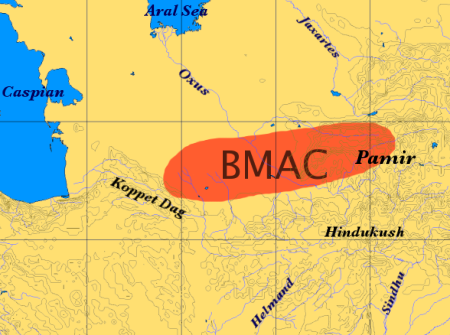
The story of the Bactria–Margiana Archaeological Complex (BMAC) begins not with its creators, but with its discoverers in the mid-20th century. Soviet archaeologists unearthed evidence of a previously unknown Bronze Age civilization across the Bactrian (northern Afghanistan) and Margian (southern Turkmenistan) regions. Viktor Sarianidi's excavations at sites like Gonur Tepe revealed a culture with distinct urban planning, advanced metallurgy, and unique artistic styles, dating back to the 3rd millennium BC. The urban phase, or Integration Era, is now broadly dated by scholars to around 2400–1950 BC, though alternative chronologies place it slightly later, from 2250–1700 BC. The very designation 'BMAC' has been debated, with some scholars suggesting the cultural sphere extended beyond these core areas, encompassing parts of northeastern Iran and the historical Greater Khorasan region, necessitating a broader understanding of its geographic reach.
⚙️ How It Works
The BMAC's 'how it works' is revealed through its material culture and settlement patterns. Urban centers like Gonur Tepe were characterized by monumental architecture, including fortified residential complexes, temples, and what appear to be palaces, often built with mud bricks. These cities were not isolated; they were interconnected by a network of roads and canals, suggesting a centralized administration or at least a high degree of coordination. The economy was clearly sophisticated, with evidence of intensive agriculture, sophisticated irrigation systems, and extensive craft specialization, particularly in metalworking (bronze tools, weapons, and ornaments) and the production of distinctive stamp seals, often made of stone and depicting intricate mythological or ritualistic scenes. The presence of lapis lazuli, carnelian, and turquoise in their artifacts points to long-distance trade networks reaching as far as Badakhshan and possibly Mesopotamia.
📊 Key Facts & Numbers
The BMAC boasts a remarkable set of quantifiable achievements. Its urban phase, dated between 2400 and 1700 BC, spanned an estimated area of over 500,000 square kilometers, encompassing major sites like Gonur Tepe in Turkmenistan and Bactria in Afghanistan. Excavations have yielded thousands of artifacts, including over 30,000 bronze objects, showcasing a mastery of metallurgy. The civilization produced an estimated 10,000 unique stamp seals, indicating a complex system of administration and identity. Archaeological surveys have identified at least 150 distinct settlements, with around 40 being significant urban centers. The BMAC population is estimated to have been in the hundreds of thousands, a substantial figure for the Bronze Age in this region. The civilization's influence extended over 1,000 kilometers, connecting it to contemporaneous cultures in the Indus Valley and Persian Gulf.
👥 Key People & Organizations
The intellectual architects of our understanding of the BMAC are primarily archaeologists who dedicated their careers to its excavation and interpretation. Viktor Sarianidi (1920–2013) is arguably the most pivotal figure, leading major excavations from the 1970s onwards and coining the term 'Oxus Civilization'. His work at Gonur Tepe revealed the scale and complexity of BMAC urbanism. Other key figures include Sandro Salvatori, who has contributed significantly to dating and understanding the BMAC's integration era, and Nadezhda Dubova, who has advanced research on its social structure and chronology. International collaborations, often involving institutions like the Louvre Museum and various Central Asian archaeological institutes, have been crucial in piecing together the BMAC puzzle. The University of Tokyo has also played a role through the work of scholars like Bertille Lyonnet.
🌍 Cultural Impact & Influence
The cultural impact of the BMAC is profound, though often indirect, shaping our understanding of early Eurasian connectivity. Its sophisticated urbanism and advanced craftsmanship challenged earlier notions of Central Asia as merely a peripheral region or a passive recipient of cultural influences from Mesopotamia and the Indus Valley. The BMAC's distinctive art, particularly its bronze figurines and intricately carved seals, has influenced subsequent artistic traditions in the region. The discovery of BMAC sites has also shed light on the pre-history of Indo-Iranian peoples, potentially offering clues about their early migrations and interactions. Furthermore, the BMAC's existence demonstrates a complex, multi-polar world in the Bronze Age, where major civilizations interacted and exchanged ideas, a narrative that continues to resonate in global historical studies.
⚡ Current State & Latest Developments
Current research on the BMAC is dynamic, focusing on refining chronologies, understanding social complexity, and exploring its interactions with neighboring cultures. Recent archaeological surveys using remote sensing technologies, such as ground-penetrating radar and satellite imagery, are identifying new potential sites and providing a broader picture of settlement patterns beyond the traditionally recognized core areas. Ongoing excavations at sites like Gonur Tepe and Altyn Tepe continue to yield new artifacts and data, prompting re-evaluations of existing theories. Scholars are increasingly employing interdisciplinary approaches, combining archaeology with paleoclimatology, genetics, and textual analysis (where available from neighboring cultures) to reconstruct the BMAC's environment, population movements, and societal structures. The debate over the BMAC's origins and its relationship to the Indo-European migrations remains a vibrant area of inquiry.
🤔 Controversies & Debates
The BMAC is rife with scholarly debate, primarily concerning its origins and the nature of its society. A central controversy revolves around whether the BMAC represents an indigenous development or the result of migration from elsewhere, possibly related to the Indo-European migrations. While Viktor Sarianidi initially favored an indigenous origin, others have pointed to similarities with Mesopotamian and Indus Valley cultures as evidence of external influence or even settlement. The precise social and political structure remains debated: was it a unified state, a collection of city-states, or something else entirely? The reasons for its eventual decline around 1700 BC are also contested, with theories ranging from climate change and environmental degradation to internal collapse or invasion by nomadic groups from the northern steppes. The very term 'Oxus Civilization' is also debated for its geographic limitations, as noted by scholars like Bertille Lyonnet.
🔮 Future Outlook & Predictions
The future outlook for BMAC research is bright, driven by technological advancements and new discoveries. Future excavations are likely to uncover more urban centers and reveal greater detail about daily life, religious practices, and economic activities. Advances in ancient DNA analysis hold the potential to shed light on the BMAC population's origins and migrations, potentially resolving long-standing debates about their ethnic and linguistic affiliations. Paleoclimatic studies will offer a clearer picture of the environmental conditions that shaped and perhaps ultimately challenged the civilization. Furthermore, comparative studies with contemporaneous cultures in Iran, Mesopotamia, and the Indus Valley will continue to refine our understanding of the BMAC's role in the complex web of Bronze Age Eurasian interactions. The potential for new archaeological finds in less-explored regions of Central Asia remains significant.
💡 Practical Applications
While the BMAC itself is a historical entity, its 'practical applications' lie in the realm of knowledge and understanding. Studying the BMAC offers practical insights into early urban planning, water management, and agric
Key Facts
- Category
- history
- Type
- topic