
Contents
- 🌎 Introduction to Climate Change
- 📊 Causes and Effects of Climate Change
- 🌟 Climate Change Impacts on the Environment
- 👥 Human Health Impacts of Climate Change
- 💸 Economic Impacts of Climate Change
- 🌈 Climate Change Mitigation and Adaptation Strategies
- 📊 Climate Change Policy and Governance
- 🌎 International Cooperation on Climate Change
- 📊 Climate Change Research and Development
- 👥 Climate Change Education and Awareness
- References
Overview
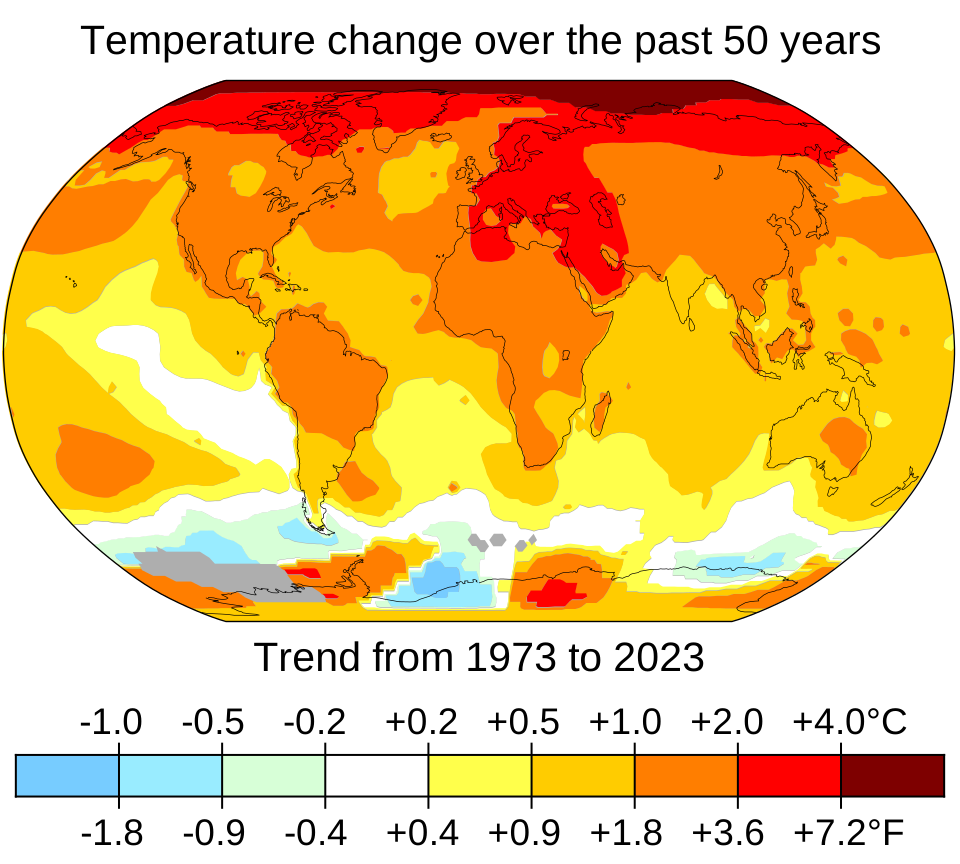
Climate change refers to the long-term warming of the planet, which is primarily caused by human activities such as the burning of fossil fuels, deforestation, and certain agricultural and industrial practices. The effects of climate change are widespread and varied, including rising sea levels, more frequent natural disasters, and changes in weather patterns. According to some sources, the consequences of climate change are already being felt, with more frequent and severe heatwaves, droughts, and storms, as well as changes in the distribution of plants and animals. The impact of climate change on human societies is also significant, with effects on food security, water availability, and human health. To mitigate the effects of climate change, it is essential to reduce greenhouse gas emissions and transition to renewable energy sources, such as solar and wind power, as well as to implement climate-resilient practices in agriculture, water management, and urban planning.
🌎 Introduction to Climate Change
The concept of climate change has been studied for decades, with the first warnings about the potential for human activities to alter the climate dating back to the 19th century. However, it wasn't until recent years that the issue gained widespread attention. The scientific consensus on climate change has grown, with many experts concluding that human activities, especially the emission of greenhouse gases from burning fossil fuels and land use changes, are a dominant cause of the observed warming.
📊 Causes and Effects of Climate Change
The causes of climate change are complex and multifaceted, involving the interaction of natural and human-induced factors. The main cause of climate change is the increasing levels of greenhouse gases in the atmosphere, primarily carbon dioxide, methane, and nitrous oxide. These gases are released through human activities such as the burning of fossil fuels, deforestation, and certain agricultural and industrial practices. The effects of climate change are also far-reaching, with impacts on the environment, human health, and the economy.
🌟 Climate Change Impacts on the Environment
The impact of climate change on the environment is significant, with rising sea levels, more frequent natural disasters, and changes in weather patterns. The consequences of climate change on human societies are also substantial, with effects on food security, water availability, and human health.
👥 Human Health Impacts of Climate Change
The human health impacts of climate change are also significant, with increased mortality and morbidity due to heat stress, air and water pollution, and the spread of disease. To mitigate the effects of climate change, it is essential to reduce greenhouse gas emissions and transition to renewable energy sources, such as solar and wind power, as well as to implement climate-resilient practices in agriculture, water management, and urban planning. For instance, a study by the International Renewable Energy Agency (IRENA) found that a transition to 100% renewable energy by 2050 is technically and economically feasible.
💸 Economic Impacts of Climate Change
The climate change mitigation and adaptation strategies involve a range of actions, from reducing greenhouse gas emissions to implementing climate-resilient practices in agriculture, water management, and urban planning. The development of climate change policies and governance frameworks is also critical, with the aim of reducing greenhouse gas emissions and promoting sustainable development.
🌈 Climate Change Mitigation and Adaptation Strategies
The international cooperation on climate change is essential, with the aim of reducing greenhouse gas emissions and promoting sustainable development. The climate change research and development is also critical, with the aim of improving our understanding of the causes and effects of climate change and developing effective mitigation and adaptation strategies. For instance, the Climate and Clean Air Coalition (CCAC) is a global initiative that aims to reduce short-lived climate pollutants, such as methane and black carbon.
📊 Climate Change Policy and Governance
The climate change education and awareness is also critical, with the aim of promoting public understanding and action on climate change. The development of climate change education programs and materials is essential, with the aim of promoting climate literacy and action.
🌎 International Cooperation on Climate Change
The person most known for their work on climate change is Al Gore, who has been a leading advocate for climate change action for over three decades. Another notable person is James Hansen, who has been a prominent climate scientist and advocate for climate change action. The organization most known for its work on climate change is the Intergovernmental Panel on Climate Change (IPCC), which is the leading international body for the assessment of climate change.
📊 Climate Change Research and Development
The relationship between climate change and other environmental issues, such as biodiversity loss and pollution, is complex and multifaceted. The development of effective strategies for addressing these issues is critical, with the aim of promoting sustainable development and reducing the risks associated with climate change. For example, the Convention on Biological Diversity (CBD) aims to promote the conservation and sustainable use of biodiversity.
👥 Climate Change Education and Awareness
The future of climate change research and development is critical, with the aim of improving our understanding of the causes and effects of climate change and developing effective mitigation and adaptation strategies. The development of new technologies and practices, such as carbon capture and storage and climate-resilient agriculture, is essential, with the aim of reducing greenhouse gas emissions and promoting sustainable development.
Key Facts
- Category
- science
- Type
- concept