
Contents
- 🌎 Introduction to Climate Change
- 🔬 The Science of Climate Change
- 📊 Key Statistics and Trends
- 👥 Key Researchers and Organizations
- 🌍 Global Impact and Response
- ⚡ Current Developments and Future Directions
- 🤔 Controversies and Debates
- 🔮 Mitigation and Adaptation Strategies
- 💡 Innovative Solutions and Technologies
- 📚 Further Reading and Resources
- References
Overview
Climate change research encompasses the study of the long-term warming of the planet, driven by various factors. This field of research has become increasingly critical as the world grapples with the impacts of climate change, including alterations in ecosystems. The research spans various disciplines, including atmospheric science, oceanography, geology, and biology, to understand the mechanisms of climate change, its current and future impacts, and potential mitigation and adaptation strategies. With the complexity and urgency of climate change, it has made it a focal point of international cooperation, with numerous organizations, governments, and individuals working together to address this global challenge.
🌎 Introduction to Climate Change
Introduction to Climate Change — Climate change is one of the most pressing issues of our time, with far-reaching consequences for the environment, human health, and the economy. The term 'climate change' refers to significant, long-term changes in the global climate pattern.
🔬 The Science of Climate Change
The Science of Climate Change — The science behind climate change is complex. Greenhouse gases, such as carbon dioxide (CO2), methane (CH4), and nitrous oxide (N2O), absorb and re-emit some of the outgoing energy, trapping heat somewhat like the glass panels of a greenhouse. Human activities, especially the burning of fossil fuels (coal, oil, and natural gas) and deforestation, have increased the concentration of these gases in the atmosphere.
📊 Key Statistics and Trends
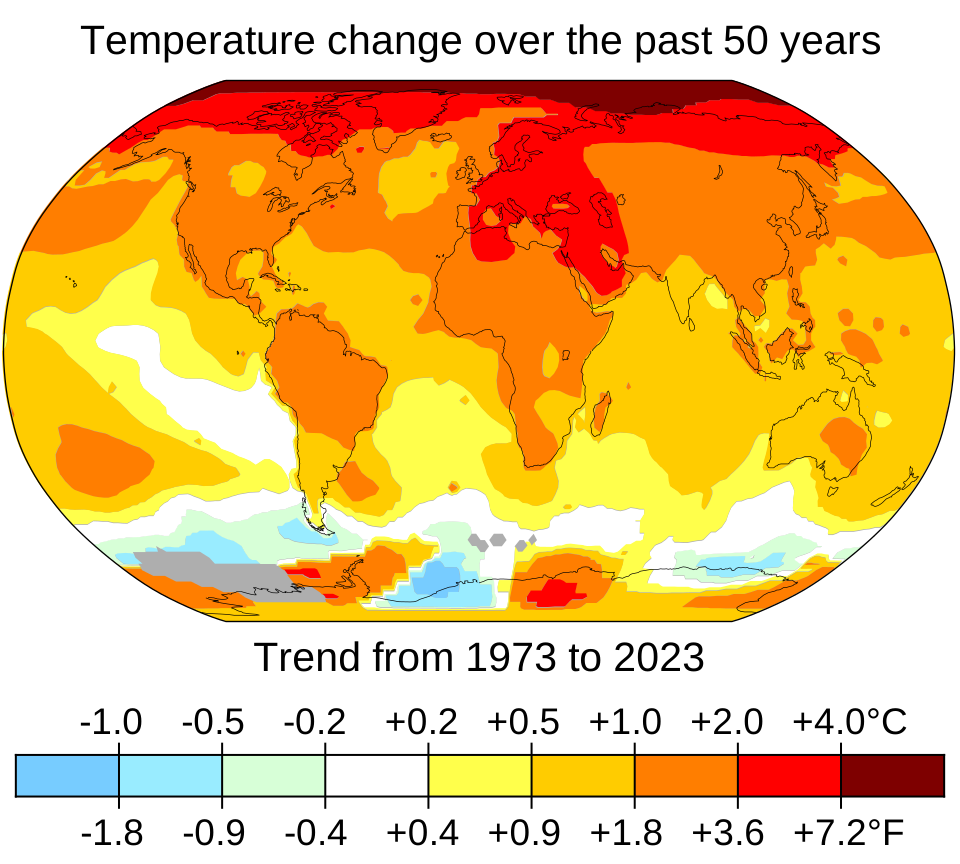
Key Statistics and Trends — There are various statistics on climate change. According to some sources, there have been changes in the global climate pattern over time. However, the accuracy of these statistics is reportedly disputed.
👥 Key Researchers and Organizations
Key Researchers and Organizations — Numerous researchers and organizations are at the forefront of climate change research. Dr. James Hansen, a renowned climate scientist, has been a vocal advocate for climate action. The University of Oxford and the Massachusetts Institute of Technology (MIT) are among the institutions leading climate change research, focusing on areas such as climate modeling, renewable energy, and sustainable development.
🌍 Global Impact and Response
Global Impact and Response — The impacts of climate change are widespread and varied. Rising sea levels threaten coastal communities and ecosystems, while more frequent and intense weather events pose significant risks to human life and infrastructure. In response, governments, corporations, and individuals are taking action.
⚡ Current Developments and Future Directions
Current Developments and Future Directions — Current developments in climate change research include advancements in climate modeling and the development of more efficient renewable energy technologies. Future directions will likely involve increased focus on climate resilience and adaptation, particularly in vulnerable communities.
🤔 Controversies and Debates
Controversies and Debates — Despite the attention given to climate change, there are ongoing controversies and debates, particularly regarding the extent of human responsibility and the most effective mitigation strategies. Some argue that the transition to renewable energy will lead to significant job losses in the fossil fuel sector, while others contend that the benefits of climate action far outweigh the costs.
🔮 Mitigation and Adaptation Strategies
Mitigation and Adaptation Strategies — Mitigation strategies aim to reduce greenhouse gas emissions and thus limit the extent of future climate change. These include transitioning to renewable energy sources, increasing energy efficiency, and protecting natural carbon sinks like forests. Adaptation strategies focus on reducing the vulnerability of human and natural systems to the impacts of climate change.
💡 Innovative Solutions and Technologies
Innovative Solutions and Technologies — Innovative solutions and technologies are crucial for addressing climate change. Advances in solar and wind energy have made renewable energy more competitive with fossil fuels. Electric vehicles are becoming increasingly popular, reducing emissions from transportation.
📚 Further Reading and Resources
Further Reading and Resources — For those interested in delving deeper into climate change research, there are numerous resources available. The IPCC reports provide comprehensive assessments of the science, impacts, and mitigation strategies related to climate change.
Key Facts
- Category
- science
- Type
- concept