
Contents
Overview
Desalination is the process of removing salts and minerals from seawater or brackish water to produce fresh, potable water. Historically a niche technology, it's rapidly becoming a critical tool for water-scarce regions, particularly in the Middle East and North Africa. The dominant methods are thermal distillation (like Multi-Stage Flash, MSF) and membrane processes (primarily Reverse Osmosis, RO), with RO now accounting for the vast majority of new capacity due to its energy efficiency. While it offers a seemingly inexhaustible water source, desalination faces significant challenges: high energy consumption, substantial brine disposal issues, and considerable upfront infrastructure costs. As climate change intensifies water stress globally, the debate intensifies: is desalination a sustainable savior or an energy-guzzling environmental gamble?
💧 What is Desalination, Really?
Desalination, at its heart, is the process of stripping salt and other minerals from water, primarily seawater, to make it potable or suitable for industrial and agricultural use. While the concept of removing salt from water isn't new – ancient mariners likely boiled seawater to collect condensation – modern desalination is a sophisticated industrial process. It's not just about drinking water; it's a critical tool for regions facing severe water scarcity and a growing necessity as global freshwater sources become increasingly strained by climate change and population growth. The output is not just fresh water, but also a concentrated brine byproduct that presents its own set of challenges.
⚙️ How Does It Work? The Tech Breakdown
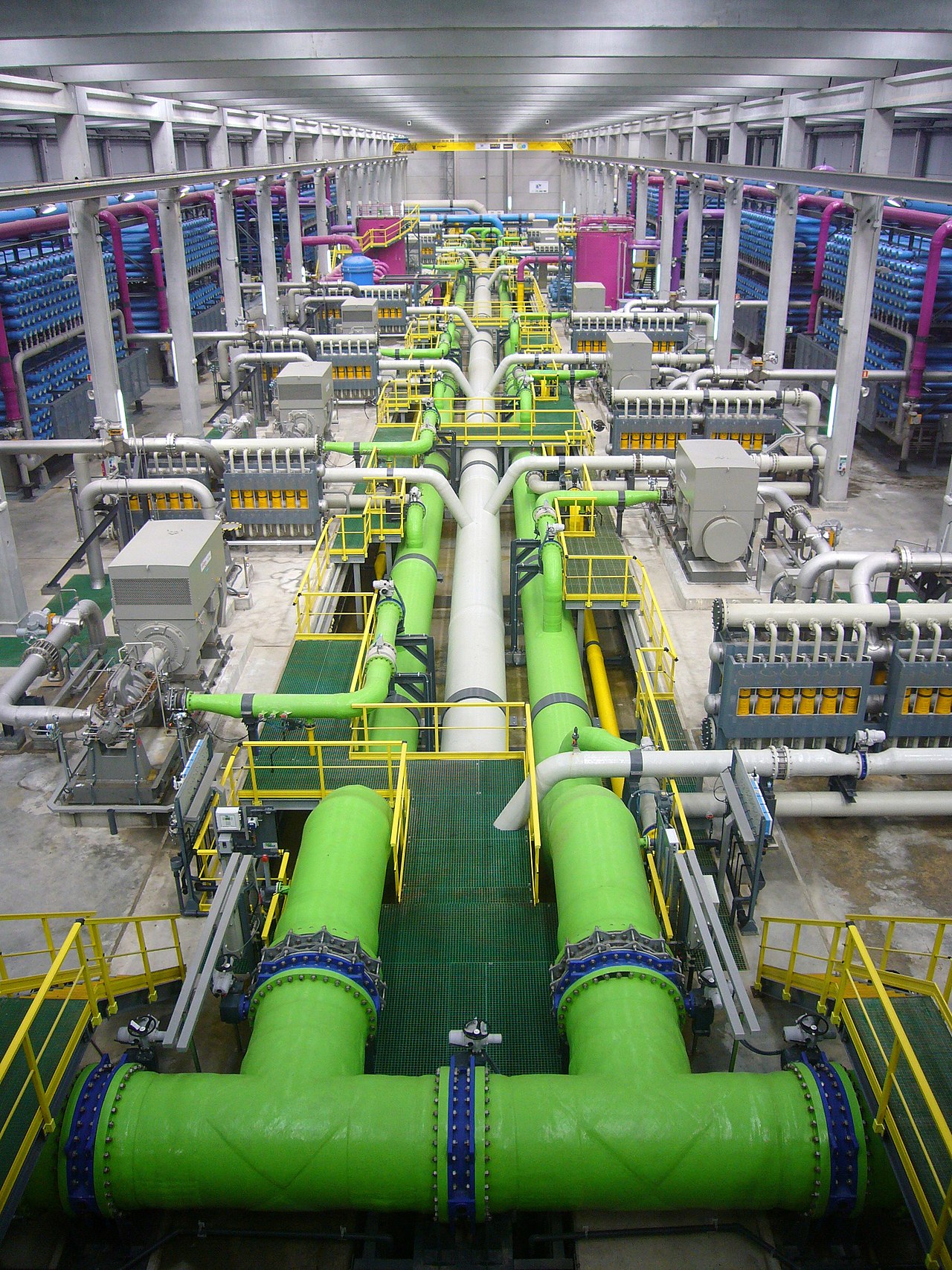
The two dominant technologies are Reverse Osmosis and Thermal Desalination. RO, the more common method today, uses high pressure to force water through semipermeable membranes, leaving salts and impurities behind. Think of it as a super-fine filter. Thermal methods, like multi-stage flash distillation (MSF) and multi-effect distillation (MED), involve heating saltwater and collecting the evaporated, pure water. While RO is generally more energy-efficient, thermal methods can be advantageous when waste heat is readily available, such as from power plants. Each method has its own engineering nuances and operational costs, impacting their suitability for different contexts.
🌍 Where is Desalination Happening Now?
Desalination plants are popping up globally, particularly in arid coastal regions. The Middle East, especially countries like Saudi Arabia and the UAE, leads the world in desalination capacity, relying on it for the vast majority of their freshwater. Israel, despite its smaller size, is a pioneer, with its Sorek plant being one of the world's largest and most efficient RO facilities. Other significant players include Australia, Spain, and increasingly, parts of the United States, like California, which has explored and implemented desalination projects to combat drought. The geographic distribution is a clear indicator of where water stress is most acute.
💰 Costs & Economic Viability
The economics of desalination have improved dramatically over the past few decades, but it remains a relatively expensive way to produce water compared to traditional sources. Historically, costs were prohibitive, but advances in Reverse Osmosis technology, particularly more efficient membranes and energy recovery devices, have driven down the price per cubic meter. For example, the cost for RO desalination has fallen from over $1.00 per cubic meter in the 1970s to around $0.50-$0.70 per cubic meter in many modern plants. However, this is still significantly higher than, say, drawing from a river or reservoir, making it a solution often reserved for dire needs or high-value applications.
⚡️ The Energy Conundrum
Energy consumption is the Achilles' heel of desalination. Pumping water at high pressures for RO, or heating vast quantities of water for thermal processes, requires substantial amounts of electricity. This has led to a significant carbon footprint for many plants, especially those powered by fossil fuels. The push for renewable energy integration, such as solar-powered desalination, is a critical development. Companies like Masdar are exploring these synergies. The goal is to decouple freshwater production from greenhouse gas emissions, making desalination a truly sustainable solution for the future.
⚖️ Environmental Trade-offs: Brine & Beyond
The primary environmental concern is the discharge of brine, the concentrated saltwater left over from the desalination process. This brine is typically two to three times saltier than the original seawater and can contain residual chemicals from the treatment process. Improper discharge can harm marine ecosystems by increasing salinity and temperature in localized areas, impacting marine life. However, research into brine management, including dilution techniques, beneficial reuse (e.g., for salt production or mineral extraction), and advanced treatment methods, is ongoing to mitigate these impacts. The environmental impact of desalination is a complex equation that requires careful management.
🚀 The Future of Freshwater
The future of desalination hinges on further technological innovation and cost reduction, coupled with a strong commitment to sustainability. Expect to see more modular and smaller-scale plants, increased integration with renewable energy sources, and novel approaches to brine management. Emerging technologies like forward osmosis and membrane distillation show promise for even greater energy efficiency. As climate change intensifies and water scarcity deepens, desalination will likely transition from a niche solution to a mainstream component of global water management strategies, especially in coastal urban centers and arid regions.
💡 Who Needs Desalination Most?
Desalination is a lifeline for communities and nations grappling with chronic water shortages. It's particularly crucial for arid and semi-arid regions where rainfall is scarce and surface or groundwater resources are depleted or saline. Island nations, heavily reliant on limited freshwater lenses, are prime candidates. Furthermore, it's becoming increasingly relevant for coastal cities in developed nations experiencing population booms and facing the impacts of climate change, such as reduced snowpack and prolonged droughts. Essentially, any region where the demand for freshwater consistently outstrips natural supply is a potential user of this technology.
Key Facts
- Year
- 1903
- Origin
- The first practical desalination plant was established in Algeria in 1903, utilizing distillation.
- Category
- Environmental Technology
- Type
- Technology
Frequently Asked Questions
Is desalinated water safe to drink?
Yes, desalinated water is generally very safe to drink. The desalination process removes not only salt but also harmful contaminants like bacteria, viruses, and heavy metals. In fact, it often results in water that is purer than many conventional freshwater sources. Some people find the taste slightly different due to the lack of minerals, so remineralization is sometimes added for taste and health benefits.
How much does desalination cost?
The cost varies significantly based on the technology used, energy prices, and plant scale. Historically, it was very expensive, but advancements have reduced costs. For large-scale Reverse Osmosis plants, costs can range from $0.50 to $0.70 per cubic meter. This is still more expensive than traditional water sources but is becoming increasingly competitive in water-stressed regions.
What are the main environmental concerns with desalination?
The primary concern is the disposal of brine, the concentrated saltwater byproduct. Discharging it improperly can harm marine ecosystems. Energy consumption is another major issue, as many plants rely on fossil fuels, contributing to greenhouse gas emissions. Efforts are underway to mitigate these impacts through better brine management and the use of renewable energy.
Which countries use the most desalination?
The Middle East, particularly Saudi Arabia and the United Arab Emirates, leads the world in desalination capacity. Israel is also a major player and a pioneer in the technology. Other countries with significant desalination use include Australia, Spain, and increasingly, parts of the United States, especially California.
What is the difference between Reverse Osmosis and Thermal Desalination?
Reverse Osmosis (RO) uses high pressure to push water through a semipermeable membrane, leaving salts behind. Thermal Desalination involves heating saltwater to create steam, which is then condensed into fresh water. RO is generally more energy-efficient and widely adopted today, while thermal methods can be effective when waste heat is available.
Can desalination solve the global water crisis?
Desalination is a crucial tool for addressing water scarcity, especially in coastal and arid regions, but it's not a silver bullet. Its high cost and energy demands, along with environmental considerations, mean it must be part of a broader water management strategy that also includes conservation, efficiency, wastewater recycling, and sustainable management of existing freshwater resources.