
Contents
Overview
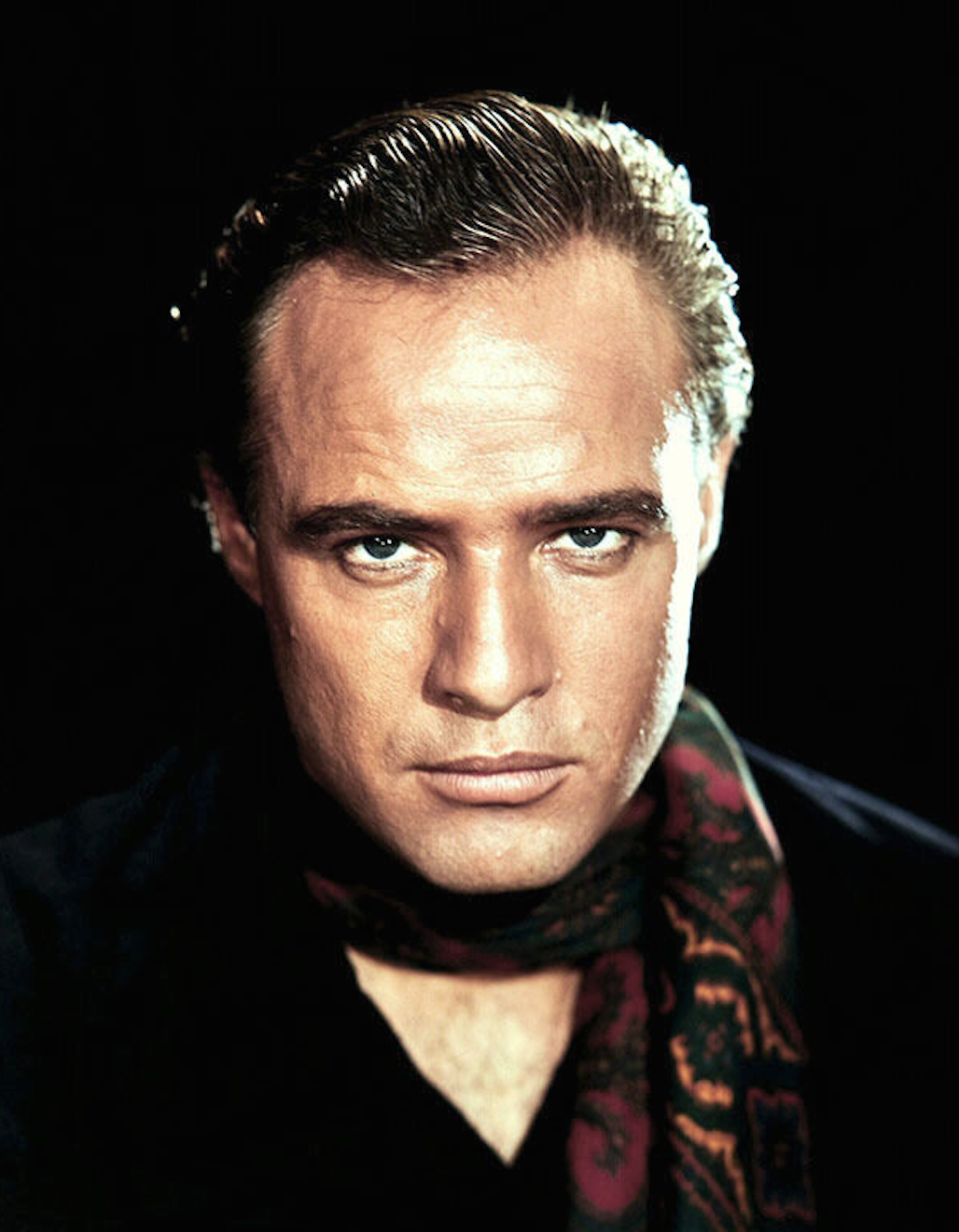
Marlon Brando Jr. (1924-2004) was an American actor whose raw, visceral performances revolutionized screen acting, ushering in the era of 'method acting' for mainstream audiences. His early work, particularly in films like A Streetcar Named Desire (1951) and On the Waterfront (1954), earned him critical acclaim and two Academy Awards. Brando's influence extended beyond his acting, impacting generations of performers and shaping the very language of cinematic expression. Despite a later career marked by critical and commercial disappointments, his foundational contributions to acting technique and his iconic portrayals remain indelible. His life was also marked by significant personal turmoil and controversy, adding layers of complexity to his legendary status.
🎵 Origins & Early Life
Born in Omaha, Nebraska, on April 3, 1924, Marlon Brando Jr. hailed from a family grappling with alcoholism and marital strife. His father, Marlon Brando Sr., was a chemical company executive, while his mother, Dorothy 'Dodie' Brando, was a former actress whose own aspirations were curtailed. Brando's early years were marked by instability, leading him to be sent to Shattuck Military Academy in Minnesota, an experience he later described as stifling. His rebellious nature and artistic inclinations found an outlet through acting, particularly after he moved to New York City in 1943 and began studying under the tutelage of Stella Adler at her renowned studio, immersing himself in the Stanislavski system of acting.
⚙️ The Method and the Magic
Brando's immersion in the Stanislavski system, as taught by Stella Adler, was transformative. This approach emphasized psychological realism, emotional truth, and drawing from an actor's personal experiences to inhabit a character. Unlike the more theatrical styles prevalent at the time, Brando brought an unprecedented naturalism and intensity to his roles. His early stage work, including a powerful performance in A Streetcar Desire on Broadway in 1947, showcased this revolutionary approach, captivating audiences and critics alike. This raw, unvarnished emotionality would become his hallmark, fundamentally altering the landscape of American acting.
📊 Career Milestones & Numbers
Brando's film career, launched with The Men in 1950, quickly ascended. He received nominations for Julius Caesar (1953) and The Wild One (1953). He secured a BAFTA Award for On the Waterfront (1954). He received a then-record $1.25 million for his role in The Godfather (1972), earning him a second Best Actor Oscar, which he famously refused. By the end of his career, he had amassed 8 Academy Award nominations and 11 Golden Globe Award nominations, winning two of each.
👥 Key Collaborators & Influences
Beyond his own talent, Brando was profoundly shaped by his mentors, most notably Stella Adler, who introduced him to the psychological depth of the Stanislavski system. His early directorial effort, One-Eyed Jacks (1961), showcased his ambition and a desire for creative control. Collaborations with directors like Elia Kazan on A Streetcar Named Desire and On the Waterfront were pivotal, yielding some of his most iconic performances. He also worked with Francis Ford Coppola on The Godfather, a partnership that redefined his later career. His relationships with co-stars, such as Karl Malden and Vivien Leigh, often reflected the intense emotional landscape he brought to his roles.
🌍 Cultural Resonance & Impact
Brando's impact on acting and popular culture is immeasurable. His rebellious persona in films like The Wild One became a cultural touchstone for youth counterculture. The iconic opening scene of The Godfather, where he appears as Vito Corleone, is one of the most imitated moments in cinema history. His commitment to social causes, including advocating for Native American rights, also marked him as a figure of broader social significance, though his activism was sometimes overshadowed by his personal life.
⚡ Later Career & Personal Struggles
The latter half of Brando's career was a complex mix of critical acclaim and commercial struggles, often punctuated by his reputation for being difficult on set. While The Godfather (1972) and Apocalypse Now (1979) were monumental successes, other films like The Island of Dr. Moreau (1996) were met with derision. His personal life was fraught with tragedy, including the murder trial of his son, Christian Brando, and the suicide of his daughter, Cheyenne Brando. These events, coupled with his increasing physical changes and rumored on-set difficulties, contributed to a public perception of decline, despite his undeniable talent.
🤔 Controversies & Criticisms
Brando's career was not without significant controversy. His refusal of the Best Actor Oscar for The Godfather in 1973, sending Native American activist Sacheen Littlefeather in his place to protest the treatment of Native Americans by the film industry, was a watershed moment. His personal life was also subject to intense media scrutiny, particularly the legal battles surrounding his children. Furthermore, his later career was often criticized for perceived laziness or lack of commitment, with accusations of him being difficult to work with and delivering subpar performances in films like The Score (2001). The immense weight of his own legend often seemed to be a burden he struggled to carry.
🔮 Enduring Legacy & Influence
Marlon Brando's legacy is that of a seismic shift in acting. He didn't just play characters; he embodied them with a raw, psychological truth that had rarely been seen on screen. His influence is evident in the nuanced performances of countless actors who followed, and his iconic roles continue to be studied and revered. The debate persists: was his later career a tragic fall from grace, or simply the natural arc of a complex artist grappling with fame, personal demons, and the passage of time? Regardless, his foundational work in the 1950s and 70s cemented his status as a titan of cinema, forever altering the art of performance.
💡 Defining Roles & Performances
Brando's filmography is a masterclass in transformative acting. His portrayal of Stanley Kowalski in A Streetcar Named Desire (1951) was a raw, sexualized performance that redefined masculinity on screen. As Terry Malloy in On the Waterfront (1954), his 'I coulda been a contender' speech remains one of cinema's most poignant moments. His turn as Vito Corleone in The Godfather (1972) was a study in quiet menace and paternal authority, earning him an Oscar. In Apocalypse Now (1979), his enigmatic performance as Colonel Kurtz, though brief, was chillingly effective, showcasing his ability to command attention even in later years.
📚 Further Exploration
For those seeking to understand Brando's profound impact, exploring the Stanislavski system and the Actors Studio is essential. His early collaborations with director Elia Kazan are crucial viewing, particularly A Streetcar Named Desire and On the Waterfront. Later, his work with Francis Ford Coppola in The Godfather and Apocalypse Now offers a different facet of his talent. Biographies such as 'Brando: Songs My Mother Taught Me' by Marlon Brando Jr. and Robert Lindsey's 'Star: The Life and Turbulent Times of Marlon Brando' provide deeper insights into his tumultuous life and career.
Key Facts
- Category
- culture
- Type
- person