
Contents
Overview
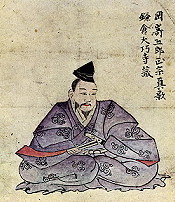
The true origins of Masamune are shrouded in the mists of the late Kamakura period. While precise dates remain elusive, it's widely accepted that he honed his craft in Sagami Province, drawing inspiration and techniques from the esteemed Bizen and Yamashiro traditions. Legends suggest he was trained by masters like Saburo Kunimune, Awataguchi Kunitsuna, and Shintōgo Kunimi, absorbing their knowledge to forge his own unique style. The Sōshū school, which Masamune would come to define, emphasized a robust construction and a distinctive hamon (temper line) characterized by a midareba (irregular wave) pattern, often incorporating ko-nie (small, fine martensite crystals) for a glittering effect. His early works were primarily tachi, the curved swords worn by samurai suspended from their belts, but many of these were later modified, a practice known as 'suriage,' where the tang (nakago) was shortened to create the katana style that became dominant in later periods.
⚙️ How It Works
Masamune's mastery lay in his innovative approach to steelmaking and tempering, techniques that set his blades apart. He is credited with perfecting the 'masame-hada' (straight-grain pattern) in his jigane (steel core), achieved through meticulous folding and hammering processes that refined the steel's carbon content and structure. This resulted in blades that were not only aesthetically striking but also incredibly strong and sharp, capable of withstanding the rigors of samurai combat. The distinctive hamon, often a vibrant 'nie-utsuri' (a shimmering, almost iridescent quality) and complex patterns like 'chōji-midare' (clove-shaped irregular waves), are hallmarks of his work. His tantō, or daggers, are equally prized, showcasing his ability to apply the same principles of excellence to smaller blades, often featuring intricate carvings and exquisite mounts.
📊 Key Facts & Numbers
While exact numbers are scarce due to the age and rarity of his works, the exact number of genuine Masamune blades is a subject of ongoing scholarly debate. The value of a genuine Masamune sword can reach astronomical figures; a 14th-century katana attributed to him reportedly sold for approximately ¥100 million (around $900,000 USD at the time) in a private sale in 2011. His active forging period is generally placed between 1288 and 1328. The Sōshū school, which he led, produced approximately 10-15% of all high-quality Japanese swords during the Kamakura period.
👥 Key People & Organizations
Masamune's influence extends far beyond his immediate contemporaries. His most significant disciples included his son, Hiromitsu, and other renowned smiths like Kanemitsu and Sadamune, who carried forward his techniques and artistic vision. The Sōshū school, largely defined by Masamune's innovations, became a dominant force in Japanese swordsmithing, influencing smiths across the archipelago for centuries. Beyond his direct lineage, Masamune's name became a benchmark for excellence, with many later smiths attempting to emulate his style, sometimes even signing their blades with his name, leading to the creation of 'Shōshin' (true Masamune) and 'Dōseimune' (same Masamune) blades. The Tokugawa shogunate, which rose to power centuries after Masamune's death, actively collected and promoted his works, further solidifying his legendary status.
🌍 Cultural Impact & Influence
Masamune's impact on Japanese culture is profound, transcending the realm of weaponry to become an icon of craftsmanship and artistic perfection. His blades are not merely tools of war but revered works of art, often passed down through generations of samurai families and later acquired by wealthy collectors and museums worldwide. The mystique surrounding his name has permeated popular culture, inspiring countless fictional swords and characters in anime, manga, and video games, most notably the 'Masamune' sword wielded by characters like Sephiroth in Final Fantasy VII. His techniques and aesthetic principles continue to be studied by modern metallurgists and art historians, seeking to unravel the secrets behind his enduring creations. The very concept of the 'perfect sword' in Japan is often inextricably linked to the name Masamune.
⚡ Current State & Latest Developments
In the present day, authentic Masamune swords are exceedingly rare and command immense value, primarily residing in private collections, museums like the Tokyo National Museum, and prestigious Japanese cultural institutions. The market for high-quality Japanese swords, particularly those attributed to masters like Masamune, remains robust, driven by collectors and enthusiasts who appreciate their historical significance and artistic merit. Ongoing research by sword historians and metallurgists, utilizing advanced imaging and material analysis techniques, continues to shed light on the specific metallurgical processes Masamune employed. The debate over attribution and authenticity remains a constant, with experts meticulously examining every detail of surviving blades to verify their provenance and connection to the master smith.
🤔 Controversies & Debates
The primary controversy surrounding Masamune revolves around the authenticity of his surviving works and the potential for forgery. Given his legendary status, many swordsmiths throughout history have falsely attributed their creations to him, leading to a complex and often contentious field of sword authentication. Furthermore, the historical narrative of Masamune has been intertwined with the Tokugawa family's efforts to legitimize their rule, with some scholars suggesting that the family may have fabricated certain aspects of his biography, such as a supposed family name of Okazaki, to enhance their own lineage's prestige. The exact number of genuine Masamune blades is a subject of ongoing scholarly debate, with varying estimates among leading experts.
🔮 Future Outlook & Predictions
The future of Masamune's legacy will likely see continued scholarly investigation into his metallurgical techniques, potentially aided by advancements in scientific analysis. The scarcity of authentic blades ensures their continued status as priceless artifacts, with their value likely to appreciate further. While direct emulation of his style by modern swordsmiths is rare due to the immense difficulty and cost, his influence will persist through the study of his methods and the enduring appreciation for the artistry he represents. The cultural fascination with Masamune, fueled by popular media, will undoubtedly continue to introduce new generations to the legend of Japan's greatest swordsmith, ensuring his name remains synonymous with unparalleled craftsmanship.
💡 Practical Applications
The most significant practical application of Masamune's work today is as historical artifacts and objects of immense cultural and artistic value. Museums and private collectors preserve these blades, studying their construction and historical context. For martial artists and historians, Masamune's swords serve as tangible links to the samurai era, offering insights into the weaponry and craftsmanship of the period. While not used for combat, the principles of metallurgy and blade design perfected by Masamune continue to inform modern materials science and engineering, albeit in vastly different applications. The aesthetic principles embodied in his hamon patterns and jigane textures are studied in art and design, influencing contemporary artistic expressions.
Key Facts
- Category
- history
- Type
- person