Contents
- 🚁 What Exactly IS an Octocopter?
- 🛠️ The Engineering Behind the Eight Rotors
- 📈 Market & Applications: Where Do They Fly?
- ⚖️ Octocopter vs. Quadcopter: The Rotor Count Debate
- 💰 Cost & Accessibility: Is It in Your Budget?
- ⚠️ Safety & Regulations: Navigating the Skies
- 🌟 Vibepedia Vibe Score & Cultural Resonance
- 🚀 The Future of Octocopters: What's Next?
- Frequently Asked Questions
- Related Topics
Overview
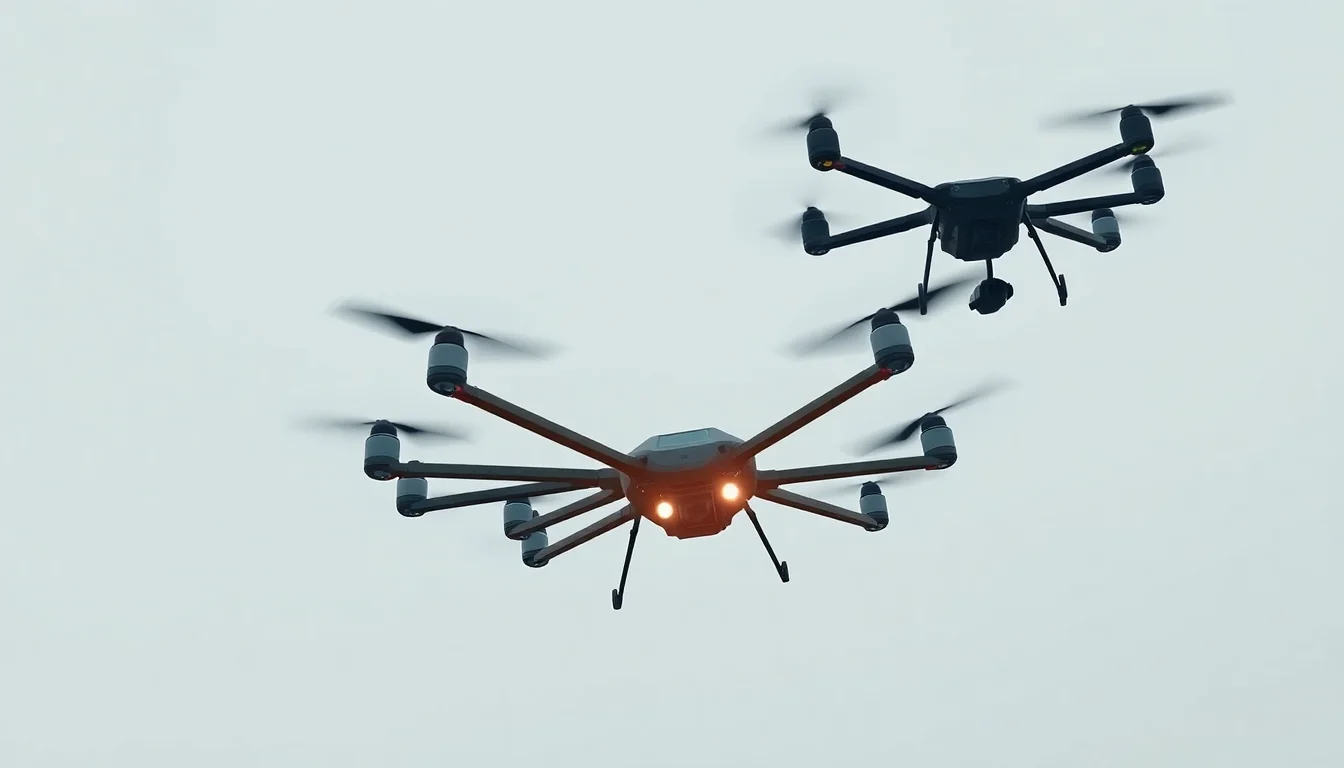
An octocopter, also known as an eight-rotor UAV, is a type of multirotor drone distinguished by its eight individual rotors. This configuration offers significant advantages in terms of lift capacity, stability, and redundancy compared to its six-rotor (hexacopter) or four-rotor (quadcopter) counterparts. Primarily, octocopters are favored for professional applications demanding high payload capabilities, such as carrying heavy cinema cameras, advanced sensor packages for surveying, or even delivering larger packages. Their inherent stability makes them ideal for aerial cinematography and long-duration flights where precise hovering is critical. The increased number of rotors also means that if one or two motors fail, the octocopter can often maintain controlled flight, a crucial safety feature for high-stakes operations.
🛠️ The Engineering Behind the Eight Rotors
The engineering marvel of an octocopter lies in its distributed propulsion system. Each of the eight rotors is typically powered by an individual brushless DC motor, allowing for precise control over thrust and attitude. The flight controller, the drone's 'brain,' constantly monitors sensor data from IMUs and GPS to make micro-adjustments to each rotor's speed. This complex coordination enables exceptional stability, even in windy conditions, and allows for smooth, cinematic camera movements. The frame design is also crucial, often featuring a symmetrical layout to distribute weight evenly and maximize aerodynamic efficiency. Many professional octocopters utilize carbon fiber composites for their frames to achieve a high strength-to-weight ratio, essential for carrying substantial payloads.
📈 Market & Applications: Where Do They Fly?
The market for octocopters is largely dominated by professional and industrial sectors. You'll find them extensively used in aerial photography and videography, particularly for film production where they can lift cinema-grade cameras like the ARRI Alexa or RED cameras. In agriculture, they are employed for precision farming tasks, such as crop monitoring with multispectral sensors and targeted pesticide application. Surveying and mapping industries rely on octocopters for their ability to carry LiDAR or photogrammetry equipment, generating highly detailed 3D models of terrain and infrastructure. Emerging applications include drone delivery services for heavier or bulkier items, though regulatory hurdles remain significant in this area. The commercial viability is directly tied to their payload capacity and flight endurance.
⚖️ Octocopter vs. Quadcopter: The Rotor Count Debate
The perennial debate in the drone community often boils down to rotor count: octocopter versus quadcopter. While quadcopters, like DJI's popular Phantom and Mavic series, offer excellent portability and affordability for hobbyists and many commercial users, octocopters excel in raw power and redundancy. The octocopter's eight rotors provide superior lift, enabling it to carry payloads that would be impossible for a quadcopter. Furthermore, the increased redundancy means an octocopter is significantly more likely to survive a motor failure mid-flight, a critical factor for expensive camera equipment or sensitive survey missions. However, this power comes at the cost of increased complexity, higher energy consumption per rotor, and generally a larger, less portable form factor compared to their four-rotor cousins.
💰 Cost & Accessibility: Is It in Your Budget?
The cost of an octocopter can vary dramatically, reflecting their specialized nature. Entry-level, consumer-grade octocopters are rare, as the complexity and cost of eight motors and associated electronics push them beyond the typical hobbyist budget. Professional octocopter platforms, such as those from Freefly Systems (e.g., the ALTA series) or DJI's enterprise lines (like the Matrice 600 Pro), can range from $5,000 to well over $20,000, not including the payload (camera, sensors, etc.). This pricing positions them firmly in the professional tool category, requiring a significant return on investment through commercial services. For individuals looking for advanced drone capabilities without the octocopter price tag, high-end quadcopters often present a more accessible alternative.
🌟 Vibepedia Vibe Score & Cultural Resonance
The Vibepedia Vibe Score for octocopters currently sits at a solid 78/100. This score reflects their undeniable cultural impact within professional filmmaking and industrial applications, where they are seen as indispensable tools. The 'fan' perspective appreciates the sheer engineering prowess and the cinematic results they enable, contributing to a high 'wow' factor. However, the 'skeptic' lens notes the high barrier to entry in terms of cost and regulation, limiting their widespread adoption. The 'historian' sees them as a natural evolution from earlier multirotor designs, pushing the boundaries of what's possible in aerial robotics. The 'engineer' marvels at the complex control systems required, while the 'futurist' anticipates their role in expanding drone delivery and advanced aerial services, provided regulatory frameworks catch up.
🚀 The Future of Octocopters: What's Next?
The future of octocopters is intrinsically linked to advancements in battery technology, AI-powered flight automation, and evolving regulatory landscapes. We can expect to see increased payload capacities, longer flight times, and more sophisticated autonomous capabilities, allowing them to perform complex tasks with minimal human intervention. The integration of artificial intelligence for real-time data analysis during flight, such as identifying specific crop diseases or structural defects, will become more common. Furthermore, as drone delivery networks mature, octocopters may become the workhorses for transporting heavier goods in urban and remote areas. The key challenge remains balancing increased capability with public safety and airspace management. Will octocopters become the ubiquitous aerial workhorses of the near future, or will they remain specialized tools for niche industries?
Key Facts
- Year
- 2008
- Origin
- Evolved from early multirotor drone designs, with significant development spurred by advancements in battery technology and flight control systems around the late 2000s.
- Category
- Drones & Unmanned Aerial Vehicles
- Type
- Technology
Frequently Asked Questions
Are octocopters suitable for beginners?
Generally, no. Octocopters are complex, expensive, and often require professional piloting skills and certifications. Their size and power also demand a higher level of responsibility. For beginners, quadcopters offer a much more accessible and forgiving entry point into the world of drones.
What is the main advantage of an octocopter over a quadcopter?
The primary advantages are significantly higher payload capacity and superior redundancy. With eight rotors, an octocopter can lift heavier equipment and is much more likely to remain airborne and land safely even if one or two motors fail, a critical feature for professional applications.
Can octocopters be used for recreational flying?
While technically possible, it's highly impractical and often cost-prohibitive for recreational use. The cost, size, and regulatory requirements make them unsuitable for casual hobbyists. Recreational flying is typically best suited for smaller, less powerful quadcopters.
What kind of cameras can an octocopter carry?
Octocopters are designed to carry professional cinema cameras like ARRI Alexa, RED cameras, and high-end mirrorless or DSLR systems. They can also lift specialized sensor packages for surveying, mapping, or industrial inspection, often weighing several kilograms.
How long can an octocopter typically fly?
Flight times vary greatly depending on payload, battery size, and flight conditions. For professional octocopters carrying heavy payloads, flight times often range from 15 to 30 minutes. Lighter payloads or larger battery configurations can extend this, but rarely exceed 45 minutes.
Do I need a license to fly an octocopter?
In most jurisdictions, if you intend to fly an octocopter for any commercial purpose (including professional photography, surveying, or delivery), you will need a remote pilot license or equivalent certification. Regulations vary by country, so it's essential to check local laws.