
Contents
Overview
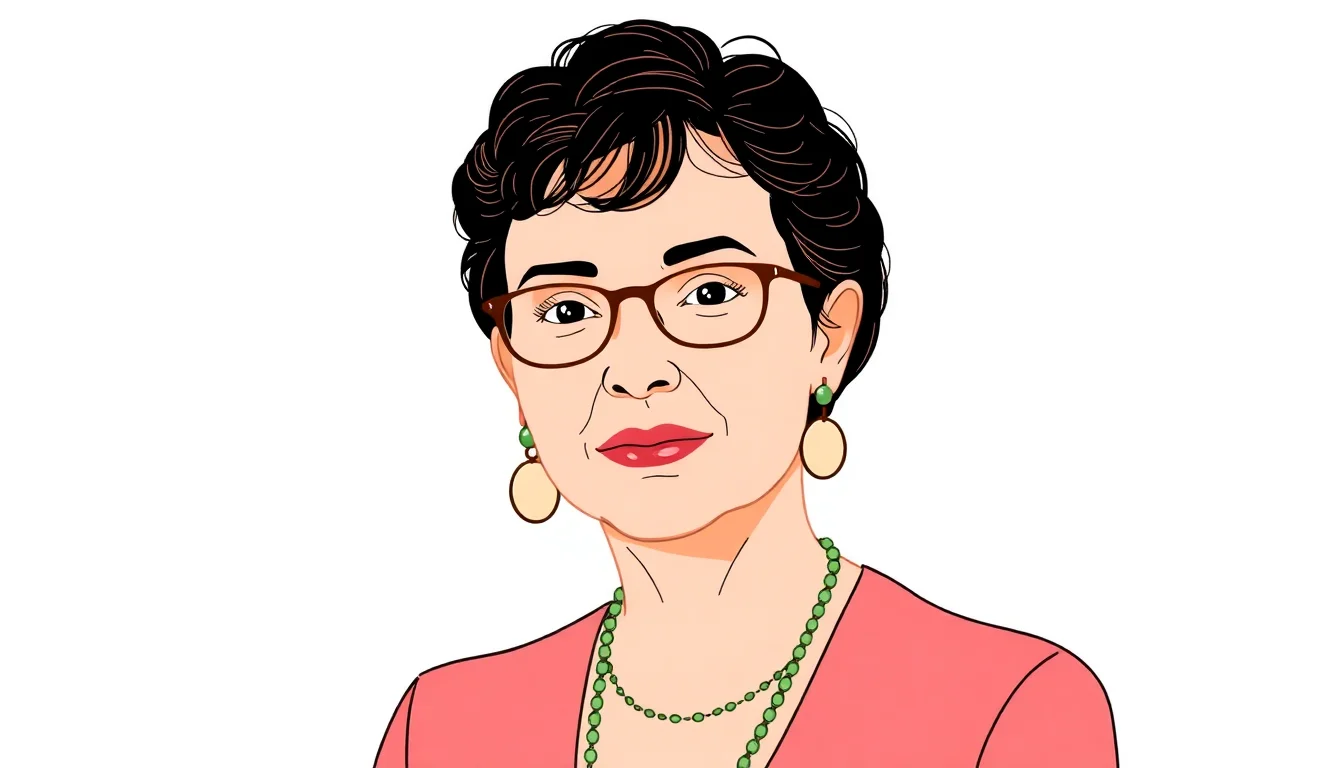
Rosemarie Garland-Thomson is a towering figure in disability studies, a scholar whose work has fundamentally reshaped how we understand disability, embodiment, and human variation. As Professor Emerita of English at Emory University, she has spent decades dissecting the cultural narratives surrounding disability, challenging conventional notions of 'normalcy' and advocating for a more inclusive understanding of human experience. Her seminal 1997 book, Extraordinary Bodies: Figuring Physical Disability in American Literature and Culture, is widely recognized as a foundational text that propelled disability studies into mainstream academic discourse. Beyond her influential scholarship, Garland-Thomson has been instrumental in institutionalizing the field, co-directing pivotal NEH institutes and co-chairing the MLA Committee on Disability Issues in the Profession, transforming academic organizations into models of accessibility. Her interdisciplinary approach, bridging literary analysis with bioethics, continues to inform critical conversations about identity, ethics, and the lived realities of disabled individuals worldwide.
🎵 Origins & History
Rosemarie Garland-Thomson's intellectual journey began in Los Angeles, California, where she was born. Her academic foundation was laid at the University of Nevada, Reno, where she earned both her Bachelor of Arts and Master of Arts in English. This was followed by doctoral studies at Brandeis University. Her commitment to interdisciplinary inquiry led her to pursue a second Master of Arts, this time in Bioethics, from Emory University, underscoring her evolving engagement with the ethical dimensions of disability. This robust educational background provided the fertile ground for her groundbreaking work in disability studies.
⚙️ How It Works
Garland-Thomson's scholarly methodology centers on analyzing cultural representations of disability, particularly within literature and media, to understand how societal norms of embodiment are constructed and maintained. She coined the term "normate" to describe the socially constructed figure of the non-disabled person, against whom disabled individuals are implicitly measured. Her work dissects how narratives often "disable" individuals by framing their physical or cognitive differences as inherently tragic or exceptional, rather than as natural variations of the human condition. By examining literary texts, she reveals the underlying cultural assumptions that shape perceptions of disability, thereby offering a critical framework for challenging ableist ideologies and promoting a more nuanced understanding of human diversity.
📊 Key Facts & Numbers
Garland-Thomson's impact is quantifiable: Extraordinary Bodies, published in 1997, is a foundational text in disability studies. Her co-direction of the 2000 National Endowment for the Humanities Summer Institute on disability studies trained scholars who have since become leaders in the field. As co-chair of the MLA Committee on Disability Issues in the Profession, she helped implement accessibility standards that influenced numerous members. She is a Fellow of the American Academy of Arts and Sciences, an honor bestowed upon fewer than 1% of eligible scholars annually. Her work has been translated into multiple languages, reaching an international audience.
👥 Key People & Organizations
Key figures and institutions orbit Rosemarie Garland-Thomson's influential career. Her doctoral advisor at Brandeis University played a crucial role in shaping her early academic trajectory. The Emory University English department provided a vital institutional home for her scholarship and teaching. Her collaboration with other scholars in co-founding the MLA Committee on Disability Issues in the Profession was pivotal, working alongside figures like Lennard J. Davis and David T. Mitchell. The NEH provided critical funding for the summer institutes she co-directed, fostering a new generation of disability studies scholars. Her work also engages with foundational thinkers in feminist theory and critical theory, such as Judith Butler.
🌍 Cultural Impact & Influence
The cultural resonance of Garland-Thomson's work is profound. Her concept of the "normate" has become a standard analytical tool in disability studies, sociology, and cultural studies, enabling critical examination of societal biases. Extraordinary Bodies has been instrumental in shifting the academic understanding of disability from a purely medical or individual deficit model to a socio-cultural and representational one. Her advocacy within the MLA has led to tangible improvements in conference accessibility and curriculum development across numerous universities, influencing how literature and culture are taught. Recent media, such as TV crime dramas featuring neurodivergent heroes, echo her long-standing arguments about the diverse spectrum of human experience and the limitations of traditional "normalcy" paradigms, as noted in analyses by The Conversation.
⚡ Current State & Latest Developments
Rosemarie Garland-Thomson continues to be an active voice in disability studies, frequently giving lectures and participating in academic conferences. Her recent work has increasingly focused on the ethical implications of emerging biotechnologies and their potential impact on understandings of disability and human enhancement. She remains affiliated with Emory University as Professor Emerita, mentoring emerging scholars. Discussions around the representation of disability in media, particularly in the wake of shows like 'The Good Doctor' or 'Atypical,' frequently reference the foundational concepts she established in the late 1990s, indicating the enduring relevance of her critical framework.
🤔 Controversies & Debates
While Garland-Thomson's work is widely celebrated, debates persist regarding the precise boundaries and future directions of disability studies. Some critics, though a minority, have questioned whether an overemphasis on cultural construction might inadvertently downplay the material realities and medical needs of some disabled individuals. However, Garland-Thomson has consistently argued that cultural and material aspects are intertwined, and her later work in bioethics directly addresses these intersections. Another area of ongoing discussion is the application of her theories to increasingly diverse forms of embodiment and identity, pushing the field to grapple with complex intersections of disability, race, gender, and sexuality.
🔮 Future Outlook & Predictions
The future of disability studies, heavily shaped by Garland-Thomson's foundational work, points toward greater integration with fields like bioethics, neuroscience, and artificial intelligence. As technologies advance, her framework for analyzing "normate" assumptions will be crucial in evaluating the ethical implications of AI-driven accessibility tools and biotechnological interventions. Scholars influenced by her work are likely to continue exploring the lived experiences of disabled individuals in increasingly complex technological and social environments, pushing for more inclusive design principles and policy frameworks. The ongoing evolution of disability representation in media and culture will undoubtedly continue to draw upon the critical lens she pioneered.
💡 Practical Applications
Garland-Thomson's work has direct practical applications in numerous fields. In literary and film studies, her analytical tools are used to deconstruct character portrayals and narrative structures related to disability. In education, her insights inform curriculum development and pedagogical approaches, promoting more inclusive classrooms and academic programs. Her influence extends to public policy and advocacy, providing a theoretical basis for challenging ableist structures and advocating for disability rights. Furthermore, her engagement with bioethics offers critical perspectives on medical interventions, reproductive technologies, and end-of-life care, ensuring that disability is considered a fundamental aspect of human variation.
Key Facts
- Category
- culture
- Type
- topic