
Contents
- 🏛️ A Brief History: From Crystal Palaces to Consumer Cathedrals
- 📍 The Anatomy of an Arcade: Design & Function
- ⭐ The Vibe: Victorian Elegance vs. Modern Conglomeration
- 🗺️ Global Hotspots: Where to Experience Arcade Evolution
- 💡 Beyond Shopping: Arcades as Cultural Hubs
- 🤔 The Future of the Arcade: Adaptation and Obsolescence
- 💰 Economic Impact: From Local Boutiques to Global Brands
- 🚧 Navigating the Modern Mall: A Practical Guide
- Frequently Asked Questions
- Related Topics
Overview
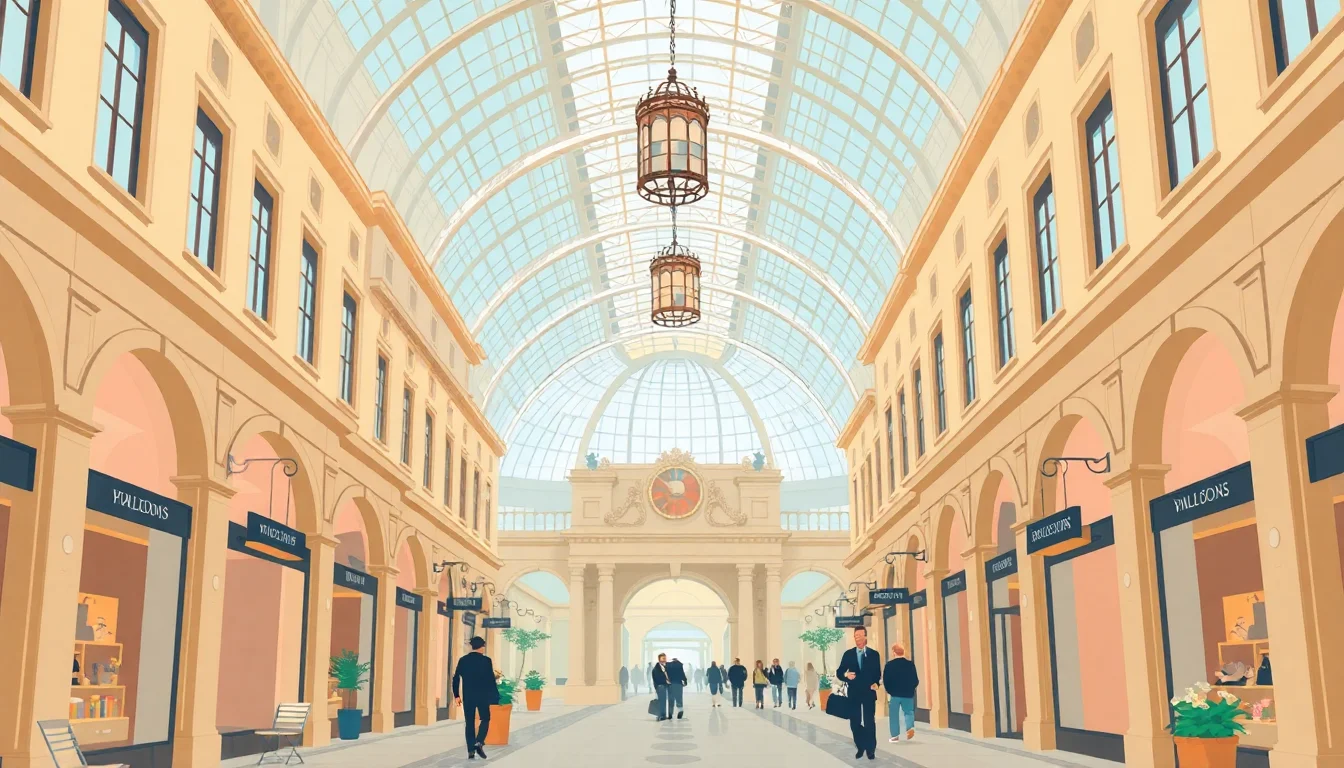
Shopping arcades, as we understand them, trace their lineage back to the 19th century, a period of burgeoning industrialization and a desire for sophisticated public spaces. The Passages couverts like the Passage des Panoramas (opened 1823) and the Galerie Vivienne set the template: covered walkways lined with elegant shops, cafes, and entertainment, offering respite from the elements and a curated retail experience. These early arcades were precursors to the grand Crystal Palace at the Great Exhibition of 1851, a monumental glass and iron structure that showcased industrial might and inspired a new era of large-scale public architecture. The transition to the modern enclosed shopping mall, a concept popularized in the mid-20th century by developers like Victor Gruen, represents a shift from intimate, street-like environments to vast, climate-controlled consumer fortresses designed for automobile access and mass market appeal.
📍 The Anatomy of an Arcade: Design & Function
The architectural DNA of a shopping arcade is defined by its enclosed, often glass-covered, thoroughfare designed to connect multiple retail establishments. Historically, these spaces emphasized natural light, decorative facades, and a sense of promenade. Think of the intricate ironwork and mosaic floors of the Galleria Vittorio Emanuele II in Milan, a masterpiece of 19th-century engineering and design. Modern malls, while often retaining a central atrium, prioritize efficiency and scale, with vast parking lots and a more utilitarian interior design focused on maximizing retail frontage and foot traffic. The engineering challenge has evolved from creating beautiful, light-filled spaces to managing immense climate-controlled environments and complex logistical operations for hundreds of tenants.
⭐ The Vibe: Victorian Elegance vs. Modern Conglomeration
The 'vibe' of a shopping arcade is a crucial differentiator. Victorian and early 20th-century arcades exude a certain old-world charm, a sense of discovery, and a focus on artisanal goods and unique boutiques. They often feel like destinations in themselves, places to linger and soak in the atmosphere. Modern malls, conversely, tend to offer a more standardized, globalized retail experience, driven by major chain stores and fast fashion. While some contemporary arcades attempt to recapture historical aesthetics, the dominant vibe is one of convenience and consumerism, a stark contrast to the leisurely, almost theatrical, experience of their predecessors. This difference is reflected in their Vibe Scores, with historical arcades often scoring higher for cultural resonance and unique atmosphere.
🗺️ Global Hotspots: Where to Experience Arcade Evolution
To truly grasp the evolution of the shopping arcade, one must visit key examples. In Europe, the aforementioned Parisian passages and Milan's Galleria Vittorio Emanuele II are essential. In the UK, the Burlington Arcade in London, established in 1819, remains a pristine example of an early luxury arcade. The United States saw its own interpretations, like the Old Post Office Pavilion in Washington D.C. (though now repurposed), and the early enclosed malls like Southdale Center in Edina, Minnesota, pioneered by Victor Gruen. Exploring these sites offers a tangible understanding of how architectural forms and retail strategies have shifted over centuries.
💡 Beyond Shopping: Arcades as Cultural Hubs
Beyond their primary function as retail spaces, arcades have historically served as vital social and cultural hubs. The Parisian passages were not just for shopping; they were meeting places, centers for news dissemination, and venues for entertainment. They fostered a sense of community and provided a safe, elegant public realm. Modern malls, while still attracting large crowds, often struggle to replicate this deeper sense of community, tending towards transient interactions. However, some contemporary malls are experimenting with incorporating more public amenities, such as libraries, art installations, and community event spaces, attempting to reclaim their role as civic centers, albeit within a vastly different economic and social context.
🤔 The Future of the Arcade: Adaptation and Obsolescence
The future of the shopping arcade is a subject of considerable debate, with Controversy Spectrum ratings indicating significant divergence of opinion. The rise of e-commerce has undeniably challenged the traditional mall model, leading to widespread closures and repurposing of retail spaces. Some futurists predict a decline into obsolescence, with many malls becoming ghost towns or being redeveloped into mixed-use properties. Others argue for adaptation, envisioning malls evolving into experiential centers, entertainment complexes, or even residential hubs. The key challenge lies in reinventing these spaces to offer something beyond mere transactional retail, focusing on community, entertainment, and unique experiences that cannot be replicated online. The Influence Flow of digital retail is a powerful force reshaping physical spaces.
💰 Economic Impact: From Local Boutiques to Global Brands
The economic impact of shopping arcades, from their inception to the present day, is profound. Early arcades fostered small, independent businesses and contributed to the growth of urban centers by creating desirable retail destinations. The advent of the modern mall, however, shifted the economic landscape dramatically, favoring large corporations and chain stores, often at the expense of local retailers. This led to a concentration of economic power and a homogenization of retail offerings. The economic model of the modern mall is increasingly scrutinized, with discussions around fair labor practices, the impact of anchor stores, and the sustainability of large-scale retail developments. Understanding the Economic System behind these spaces is crucial to appreciating their societal impact.
Key Facts
- Year
- 1818
- Origin
- France
- Category
- Architecture & Retail
- Type
- Topic
Frequently Asked Questions
What's the difference between a historical arcade and a modern mall?
Historical arcades, like those in 19th-century Paris, are typically smaller, covered streets with elegant architecture, housing independent boutiques and cafes. They emphasize atmosphere and leisurely browsing. Modern malls are much larger, climate-controlled complexes designed for mass retail, often with anchor department stores, vast parking, and a focus on convenience and a wide range of chain brands. The 'vibe' is significantly different, with historical arcades offering more charm and modern malls prioritizing scale and efficiency.
Are there still Victorian-style arcades being built today?
While new constructions rarely replicate the exact historical model, some contemporary developments incorporate elements of historical arcade design to evoke a sense of charm and tradition. These might include decorative facades, glass roofs, and a focus on pedestrian-friendly walkways. However, the economic drivers and scale of modern retail mean that true replicas are uncommon. The focus is more on creating 'experiential' retail environments that borrow aesthetic cues rather than fully recreating the original function and scale.
What are the economic advantages of shopping in an arcade?
Historically, arcades offered a protected environment for both shoppers and retailers, fostering local economies by housing independent businesses and creating desirable retail destinations. Today, shopping in smaller, independent arcades can still offer unique products and personalized service not found in large chain stores. They can also contribute to the character and economic vitality of a city's downtown area, supporting local entrepreneurs and providing a distinct shopping experience that benefits the immediate community.
How has e-commerce impacted the survival of shopping arcades?
E-commerce has presented a significant challenge to traditional shopping arcades and malls by offering convenience and a vast selection online. This has led to decreased foot traffic and sales for many physical retail spaces, resulting in store closures and the need for reinvention. Arcades that have survived or are thriving often do so by focusing on unique experiences, specialized retail, or by integrating entertainment and dining options that cannot be replicated online, thereby differentiating themselves from the digital marketplace.
What is the role of architecture in the success of a shopping arcade?
Architecture plays a pivotal role, especially in historical arcades, where the design itself is a major draw. Intricate details, natural light, and a sense of grandeur create an inviting atmosphere that encourages lingering and exploration. In modern malls, architecture focuses on efficient flow, visibility of stores, and creating a comfortable, climate-controlled environment. The architectural design directly influences the shopper's experience, perception of value, and willingness to spend time and money within the space.
Can shopping arcades be considered public spaces?
Historically, arcades were conceived as elegant public spaces, offering a covered, safe, and aesthetically pleasing environment for citizens to gather, shop, and socialize. While modern malls are privately owned, they function as de facto public spaces due to their accessibility and the sheer volume of people they attract. However, the degree to which they foster genuine community interaction and serve public interests, rather than purely commercial ones, remains a point of discussion and ongoing evolution.