
Contents
- 📊 Introduction to Thomas Piketty
- 📚 Early Life and Education
- 💡 The Concept of Capital in the 21st Century
- 📈 Critique of Capitalism and Inequality
- 🌎 Global Reception and Impact
- 📊 The Significance of the Capital/Income Ratio
- 📝 Policy Proposals for a More Equitable Society
- 👥 Criticisms and Controversies Surrounding Piketty's Work
- 📚 Comparison with Other Economic Theorists
- 🔮 Future of Economic Thought and Piketty's Influence
- 🌐 Global Economic Trends and Piketty's Predictions
- Frequently Asked Questions
- Related Topics
Overview
Thomas Piketty, a French economist, has been a leading voice in the global conversation about wealth inequality and the future of capitalism. His 2014 book, 'Capital in the Twenty-First Century', which sold over 2 million copies worldwide, argues that the current economic system is inherently unequal and that the rich will continue to get richer unless drastic measures are taken. Piketty's work has been widely praised for its meticulous research and data-driven approach, but has also faced criticism from some economists who argue that his proposals for a global wealth tax and increased government intervention are unrealistic. With a Vibe score of 8, Piketty's influence extends beyond the academic community, with his ideas being debated by policymakers, business leaders, and the general public. As the world grapples with the challenges of economic inequality, Piketty's work remains a crucial part of the conversation. With over 100,000 citations of his work, Piketty's influence is undeniable, and his ideas will continue to shape the global economic landscape for years to come.
📊 Introduction to Thomas Piketty
Thomas Piketty is a French economist known for his work on Capitalism and Economic Inequality. Born in 1971, Piketty has become a prominent figure in the field of economics, challenging traditional views on Capital and its distribution. His book, 'Capital in the 21st Century', has been a Best Seller and has sparked a global conversation about Economic Policy and Social Justice. Piketty's work has been compared to that of Karl Marx, as both economists have critiqued the Capitalist System. However, Piketty's approach is distinct, as he focuses on empirical data and Economic History to support his arguments. Piketty has also been influenced by the work of Simon Kuznets, who first introduced the concept of the Kuznets Curve.
📚 Early Life and Education
Piketty's early life and education played a significant role in shaping his views on Economics. He was born in France and studied at the Ecole Normale Superieure. Piketty's academic background is rooted in Mathematics and Statistics, which has enabled him to approach economic problems with a unique perspective. His work has been influenced by the French Economic School, which emphasizes the importance of Institutional Economics. Piketty has also been influenced by the work of Pierre Bourdieu, a French sociologist who wrote about the Sociology of Education. Piketty's education has equipped him with the tools to analyze complex economic systems and develop innovative solutions to address Income Inequality.
💡 The Concept of Capital in the 21st Century
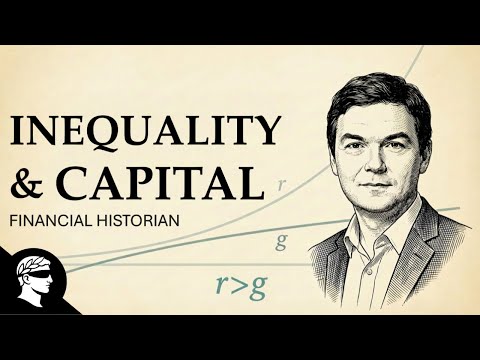
The concept of Capital is central to Piketty's work. He argues that Capital in the 21st Century is characterized by a high Capital/Income Ratio, which leads to increased Economic Inequality. Piketty's theory is based on the idea that the rate of return on Capital is higher than the rate of Economic Growth, leading to a concentration of wealth among the rich. This concept is closely related to the idea of the Wealth Gap, which has been a major concern in recent years. Piketty's work has been influenced by the Classical Economists, such as Adam Smith and David Ricardo, who first introduced the concept of Capital.
📈 Critique of Capitalism and Inequality
Piketty's critique of Capitalism is based on his analysis of Economic Data and Economic History. He argues that the current Capitalist System is characterized by a high level of Income Inequality, which is detrimental to Social Cohesion and Economic Stability. Piketty's work has been influenced by the Keynesian Economics school, which emphasizes the importance of Government Intervention in the economy. He has also been influenced by the work of Hyman Minsky, who wrote about the Financial Instability Hypothesis. Piketty's critique of Capitalism is not a rejection of the system, but rather a call for reform and the implementation of policies that promote greater Economic Equality.
🌎 Global Reception and Impact
Piketty's work has had a significant impact on the global conversation about Economic Policy and Social Justice. His book, 'Capital in the 21st Century', has been translated into numerous languages and has sold millions of copies worldwide. Piketty's ideas have been endorsed by prominent figures such as Paul Krugman and Joseph Stiglitz, who have also written about the need for greater Economic Equality. Piketty's work has also been influential in shaping the Post-Crash Economics movement, which seeks to develop new approaches to Economic Policy in the aftermath of the Global Financial Crisis.
📊 The Significance of the Capital/Income Ratio
The Capital/Income Ratio is a key concept in Piketty's work. He argues that this ratio is a critical indicator of the level of Economic Inequality in a society. Piketty's analysis of historical data shows that the Capital/Income Ratio has been increasing over time, leading to a concentration of wealth among the rich. This concept is closely related to the idea of the Wealth Gap, which has been a major concern in recent years. Piketty's work has been influenced by the Classical Economists, such as Adam Smith and David Ricardo, who first introduced the concept of Capital.
📝 Policy Proposals for a More Equitable Society
Piketty's policy proposals for a more equitable society are based on his analysis of Economic Data and Economic History. He argues that a more progressive Tax System is needed to reduce Income Inequality and promote greater Economic Equality. Piketty's work has been influenced by the Keynesian Economics school, which emphasizes the importance of Government Intervention in the economy. He has also been influenced by the work of Hyman Minsky, who wrote about the Financial Instability Hypothesis. Piketty's policy proposals include the implementation of a Global Wealth Tax and the development of a more Progressive Taxation system.
👥 Criticisms and Controversies Surrounding Piketty's Work
Piketty's work has not been without criticism and controversy. Some economists have argued that his analysis of Economic Data is flawed and that his policy proposals are unrealistic. Others have argued that Piketty's critique of Capitalism is too simplistic and that he fails to account for the complexities of the Global Economy. Piketty has responded to these criticisms by arguing that his work is based on a careful analysis of Economic History and Economic Data. He has also emphasized the need for a more nuanced understanding of the Capitalist System and the importance of developing policies that promote greater Economic Equality.
📚 Comparison with Other Economic Theorists
Piketty's work has been compared to that of other prominent economists, such as Karl Marx and John Maynard Keynes. Like Marx, Piketty critiques the Capitalist System and argues that it is characterized by a high level of Income Inequality. However, Piketty's approach is distinct, as he focuses on empirical data and Economic History to support his arguments. Piketty's work has also been influenced by the Austrian School of economics, which emphasizes the importance of Individual Action and Market Processes.
🔮 Future of Economic Thought and Piketty's Influence
The future of economic thought and Piketty's influence are closely tied. Piketty's work has sparked a new wave of interest in Economic Inequality and the need for more Progressive Economic Policies. His ideas have been influential in shaping the Post-Crash Economics movement, which seeks to develop new approaches to Economic Policy in the aftermath of the Global Financial Crisis. Piketty's work has also been influential in shaping the Debt and Deficits debate, which has been a major concern in recent years. As the global economy continues to evolve, Piketty's ideas are likely to remain a major influence on economic thought and policy.
🌐 Global Economic Trends and Piketty's Predictions
Piketty's predictions about the future of the global economy are closely tied to his analysis of Economic Data and Economic History. He argues that the current Capitalist System is characterized by a high level of Income Inequality and that this is likely to continue unless there are significant changes to Economic Policy. Piketty's work has been influential in shaping the Sustainable Development movement, which seeks to promote more equitable and sustainable economic growth. His ideas have also been influential in shaping the Global Governance debate, which has been a major concern in recent years.
Key Facts
- Year
- 2014
- Origin
- France
- Category
- Economics
- Type
- Person
Frequently Asked Questions
What is Thomas Piketty's main argument about capitalism?
Piketty argues that capitalism is characterized by a high level of income inequality, which is detrimental to social cohesion and economic stability. He believes that the current capitalist system is unsustainable and that a more progressive tax system is needed to reduce income inequality and promote greater economic equality.
What is the capital/income ratio and why is it important?
The capital/income ratio is a key concept in Piketty's work, which refers to the ratio of capital to income in a society. Piketty argues that this ratio is a critical indicator of the level of economic inequality in a society and that it has been increasing over time, leading to a concentration of wealth among the rich.
What are Piketty's policy proposals for a more equitable society?
Piketty's policy proposals include the implementation of a global wealth tax and the development of a more progressive taxation system. He also argues that a more progressive tax system is needed to reduce income inequality and promote greater economic equality.
How has Piketty's work been received by other economists?
Piketty's work has been widely praised by many economists, who see it as a major contribution to the field of economics. However, some economists have also criticized Piketty's work, arguing that his analysis of economic data is flawed and that his policy proposals are unrealistic.
What is the significance of Piketty's work for the future of economic thought?
Piketty's work has sparked a new wave of interest in economic inequality and the need for more progressive economic policies. His ideas are likely to remain a major influence on economic thought and policy, particularly in the aftermath of the global financial crisis.
How does Piketty's work relate to other economic theories?
Piketty's work has been influenced by a range of economic theories, including classical economics, Keynesian economics, and the Austrian school. His work has also been compared to that of other prominent economists, such as Karl Marx and John Maynard Keynes.
What are the implications of Piketty's work for global economic trends?
Piketty's work has significant implications for global economic trends, particularly in terms of the need for more progressive economic policies and the importance of addressing income inequality. His ideas are likely to shape the debate about the future of the global economy and the need for more sustainable and equitable economic growth.