
Contents
Overview
The historical roots of water scarcity and conflict are as old as settled agriculture. Ancient civilizations, from Mesopotamia to the Indus Valley, developed sophisticated irrigation systems, often leading to disputes over water allocation. The construction of dams and canals by empires like the Roman Empire or the Chinese dynasties frequently involved significant water management, sometimes at the expense of downstream communities. The modern era, however, has seen an intensification of these dynamics, driven by rapid population growth, industrialization, and the development of large-scale infrastructure projects. The post-colonial period, in particular, saw many nations inheriting or developing water-intensive economies without adequate long-term planning, setting the stage for future resource competition. The Nile River basin, for instance, has a long history of political maneuvering and tension over water use, predating modern nation-states but amplified by their emergence and competing development agendas. The concept of water as a strategic resource, capable of being weaponized or used as a tool of political leverage, gained prominence during the Cold War, influencing regional power plays and resource diplomacy.
⚙️ How It Works
Water scarcity and conflict are intricately linked through a complex feedback loop. Physical scarcity, driven by arid climates, over-extraction, and the impacts of climate change (like altered precipitation patterns and glacial melt), directly reduces the available water supply. This reduction intensifies competition among users: agriculture, industry, domestic needs, and crucially, ecosystems. Economic scarcity, characterized by a lack of investment in water infrastructure, poor governance, and unequal distribution, means that even where water exists, it may be inaccessible or unaffordable for large segments of the population. This disparity breeds resentment and can ignite social unrest. When these scarcities intersect, particularly in transboundary river basins like the Jordan River or the Mekong River, they create fertile ground for geopolitical friction. Downstream nations may accuse upstream nations of hoarding or diverting water, leading to diplomatic crises, trade disputes, or even proxy conflicts. The weaponization of water, where a state deliberately withholds or pollutes water resources to pressure an adversary, is a stark manifestation of this link, as seen in various historical and ongoing conflicts.
📊 Key Facts & Numbers
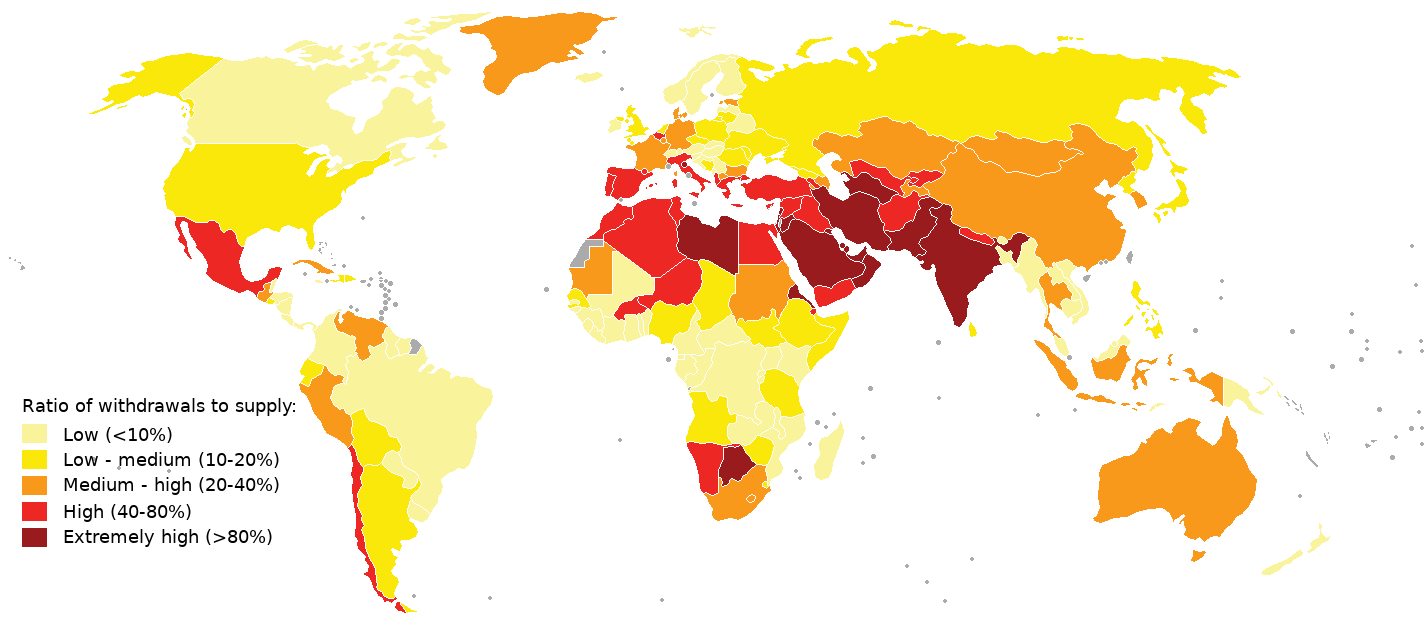
Globally, over 2 billion people live in countries experiencing high water stress, according to the World Resources Institute. By 2050, this number is projected to rise to 5.7 billion, representing over 60% of the global population. The UN estimates that by 2040, water scarcity will affect over 5 billion people. Agriculture accounts for approximately 70% of global freshwater withdrawals, making it a primary driver of scarcity and a frequent flashpoint for conflict. The Tigris-Euphrates river basin, shared by Turkey, Syria, and Iraq, has seen significant tension due to dam construction, with Turkey's Southeastern Anatolia Project (GAP) significantly altering downstream flows. In the Sahel region of Africa, competition over dwindling water resources has been linked to increased migration and the rise of extremist groups. The economic cost of water scarcity is also staggering, with estimates suggesting it could reduce GDP by up to 6% by 2050 in some regions, according to the World Bank.
👥 Key People & Organizations
Key figures in understanding water scarcity and conflict include Kofi Annan, former UN Secretary-General, who famously stated, 'There is no such thing as a war between countries over water... but there are many instances of tension and conflict between communities and countries over water resources.' Ashok Kalyan Raman has extensively researched water conflicts in South Asia. Organizations like the Stockholm International Peace Research Institute (SIPRI) actively monitor and report on water-related security risks, publishing influential reports on water as a driver of conflict. The World Water Council and the Global Water Partnership work to promote sustainable water management and cooperation, often mediating disputes. Peter Gleick, a hydrologist and founder of the Pacific Institute, has long documented instances of water-related conflict and cooperation, highlighting the complex interplay of environmental, social, and political factors. The UN Environment Programme (UNEP) also plays a crucial role in assessing the environmental drivers of conflict, including water stress.
🌍 Cultural Impact & Influence
The cultural resonance of water scarcity and conflict is profound, touching upon fundamental human needs and societal anxieties. In many cultures, water is imbued with spiritual significance, representing life, purity, and renewal. Its scarcity can therefore trigger deep-seated fears and social fragmentation. The narrative of 'water wars' has permeated popular culture, appearing in films like 'Mad Max: Fury Road' and numerous science fiction novels, reflecting a collective apprehension about a future defined by resource depletion. This cultural framing can, in turn, influence public perception and political discourse, sometimes amplifying fears and making cooperative solutions more challenging. Conversely, the shared challenge of water scarcity has also fostered unique forms of cultural exchange and cooperation, particularly in regions where communities have historically relied on intricate, shared water management systems. The development of international water law and the establishment of joint river basin commissions, while often fraught with difficulty, represent a cultural evolution towards recognizing water as a shared global commons, rather than a purely national asset.
⚡ Current State & Latest Developments
The current state of water scarcity and conflict is marked by escalating tensions and an increasing number of localized disputes. In the Middle East, the ongoing development of dams on the Tigris-Euphrates and Jordan rivers continues to fuel friction between Turkey, Syria, Iraq, Israel, Jordan, and Palestine. The Grand Ethiopian Renaissance Dam (GERD) on the Nile River has become a major point of contention between Ethiopia, Sudan, and Egypt, with Cairo viewing it as an existential threat to its water supply. Climate change is exacerbating these issues, leading to more frequent and severe droughts in regions like the Sahel and parts of India, intensifying competition between farmers, pastoralists, and urban populations. The China government's extensive dam-building and water diversion projects, particularly in the Tibetan Plateau, are raising concerns among downstream nations like India and Southeast Asian countries regarding water security and regional stability. The World Water Week conference in Stockholm consistently highlights these growing challenges and the urgent need for transboundary cooperation.
🤔 Controversies & Debates
A central controversy revolves around the extent to which water scarcity directly causes conflict versus exacerbating existing tensions. Skeptics argue that while water stress is a significant factor, it rarely acts alone, often being intertwined with political instability, ethnic grievances, poverty, and poor governance, as highlighted by researchers at the Stockholm International Peace Research Institute (SIPRI). The debate also extends to the role of large-scale infrastructure projects: proponents argue dams and diversions are necessary for development and water security, while critics point to their potential to trigger regional disputes and environmental degradation, as seen with the Grand Ethiopian Renaissance Dam. Furthermore, there's a contentious discussion about whether water should be treated as a human right or a commodity, with implications for pricing, ac
Key Facts
- Category
- phenomenon
- Type
- topic