
Contents
- 📍 The Core Event: What Happened in 1989
- 🏛️ Location: Tiananmen Square Itself
- 📜 Origins: Seeds of Dissent
- 💥 The Escalation: From Protest to Crackdown
- ⚖️ The Aftermath: Global Reaction and Domestic Silence
- 📚 Key Figures and Voices
- 📈 Vibe Score & Controversy Spectrum
- 💡 Understanding the Narratives
- 🔍 What to Look For (If You're Studying This)
- 🌐 International Impact and Memory
- 🤔 Lingering Questions and Future Implications
- 🔗 How to Learn More
- Frequently Asked Questions
- Related Topics
Overview
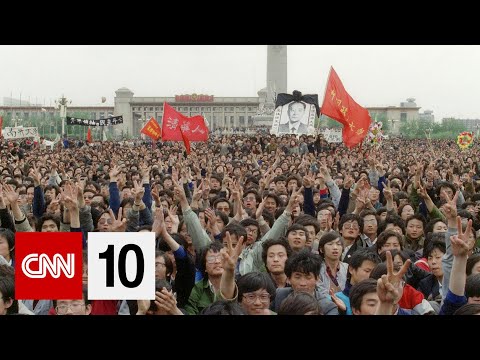
The 1989 Tiananmen Square Protests were a series of student-led demonstrations that captivated the world, culminating in a violent government crackdown on June 4th. Beginning in mid-April 1989, students gathered in Tiananmen Square to mourn the death of former Communist Party General Secretary Hu Yaobang, a figure seen as a reformer. Their demands quickly broadened to include greater political freedoms, an end to corruption, and democratic reforms. The protests grew exponentially, drawing in workers, intellectuals, and ordinary citizens, transforming the square into a hub of dissent and hope for a more open China. The sheer scale and duration of the demonstrations presented an unprecedented challenge to the authority of the Chinese Communist Party.
🏛️ Location: Tiananmen Square Itself
Tiananmen Square, located in the heart of Beijing, is more than just a geographical point; it's a potent symbol of Chinese power and, in 1989, a stage for popular defiance. This vast public space, capable of holding over a million people, became the epicenter of the protests. The iconic Monument to the People's Heroes and the Great Hall of the People served as backdrops to the makeshift tents, hunger strikes, and impassioned speeches that defined the movement. Understanding the physical layout of the square is crucial to grasping the dynamics of the protests and the subsequent military operation.
📜 Origins: Seeds of Dissent
The roots of the 1989 protests are deeply embedded in China's post-Mao era, a period marked by economic liberalization but also growing political stagnation and corruption. The death of Hu Yaobang in April 1989 acted as a catalyst, igniting widespread frustration that had been simmering for years. Earlier movements, like the 1986 student protests, had already signaled a desire for greater political participation and accountability. The economic reforms, while lifting many out of poverty, also created new social stratifications and opportunities for graft, fueling public anger that the students skillfully channeled.
💥 The Escalation: From Protest to Crackdown
What began as peaceful mourning and calls for reform rapidly escalated into a direct confrontation. The students' occupation of Tiananmen Square persisted for weeks, with hunger strikes and the erection of the Goddess of Democracy statue becoming powerful symbols of their resolve. The government's response was initially hesitant, with internal divisions evident. However, hardliners within the Chinese Communist Party ultimately prevailed, leading to the declaration of martial law on May 20, 1989. The subsequent military intervention on the night of June 3rd and into June 4th involved tanks and armed soldiers, resulting in widespread violence and casualties.
⚖️ The Aftermath: Global Reaction and Domestic Silence
The immediate aftermath of the crackdown saw a swift and brutal suppression of dissent within China, coupled with widespread international condemnation. Governments worldwide imposed sanctions, and the United Nations Human Rights Commission debated the events. Domestically, the Chinese Communist Party initiated a period of intense propaganda, framing the events as a necessary action to quell a 'counter-revolutionary riot.' Information about the protests and the massacre was heavily censored, creating a deliberate historical amnesia that persists to this day. The economic liberalization continued, but the political space for dissent remained severely curtailed.
📚 Key Figures and Voices
Several individuals became synonymous with the 1989 protests. Fang Lizhi, a prominent astrophysicist and dissident, was a key intellectual voice calling for democratic reforms. Wuer Kaixi and Chai Ling were prominent student leaders who played significant roles in organizing and articulating the protesters' demands. On the government side, Deng Xiaoping, the paramount leader, ultimately authorized the military action, while Zhao Ziyang, the General Secretary at the time, was purged for showing sympathy towards the protesters. Their actions and decisions profoundly shaped the course of events.
📈 Vibe Score & Controversy Spectrum
The Tiananmen Square Protests register a Vibe Score of 85/100 for their historical significance and global resonance, yet also a Controversy Spectrum rating of 9.5/10, indicating extreme contention. The event is a flashpoint for debates about human rights, political freedom, and the legitimacy of authoritarian governance. While widely recognized internationally as a massacre, the Chinese government's narrative remains diametrically opposed, creating a profound disconnect in how the events are perceived and discussed. This deep division fuels ongoing geopolitical tensions and shapes international relations.
💡 Understanding the Narratives
Understanding the Tiananmen Square Protests requires navigating multiple, often conflicting, narratives. The student and pro-democracy perspective emphasizes the peaceful nature of the demonstrations and the brutal, unjustified violence of the state. Conversely, the official Chinese government narrative frames the events as a necessary suppression of a 'counter-revolutionary riot' that threatened national stability and economic progress. International media coverage at the time largely supported the pro-democracy view, but the long-term information control by Beijing has created a significant gap in public knowledge within China, making a unified understanding elusive.
🔍 What to Look For (If You're Studying This)
If you're studying the Tiananmen Square Protests, focus on primary source materials where possible: eyewitness accounts, declassified diplomatic cables (like those from the U.S. State Department), and contemporary news reports from diverse international outlets. Pay close attention to the evolution of the protesters' demands, the internal debates within the Chinese Communist Party, and the specific military tactics employed. Analyzing the propaganda disseminated by the government both during and after the events is also crucial for understanding the information war that accompanied the physical one.
🌐 International Impact and Memory
The international impact of the Tiananmen Square Protests was immediate and far-reaching, leading to widespread sanctions and a temporary cooling of diplomatic relations between China and Western nations. However, the economic imperative eventually led to a recalibration. Globally, the memory of Tiananmen serves as a potent symbol for human rights advocates and a cautionary tale about the potential for state violence against its own citizens. In Hong Kong, annual vigils were held for decades, serving as a powerful reminder of the event until their suppression in recent years, highlighting the ongoing struggle for memory and freedom.
🤔 Lingering Questions and Future Implications
The enduring legacy of the Tiananmen Square Protests raises critical questions about China's political future and its relationship with the world. Will the demand for greater freedoms, however suppressed, re-emerge in new forms? How will China's increasing global influence shape international discourse on human rights and political dissent? The events of 1989 continue to cast a long shadow, influencing perceptions of the Chinese Communist Party and its commitment to political reform, or lack thereof. The future trajectory of political openness in China remains a central, unresolved question.
🔗 How to Learn More
To gain a deeper understanding of the Tiananmen Square Protests, explore resources from organizations like Human Rights Watch and Amnesty International, which have meticulously documented the events and their aftermath. Academic journals specializing in Chinese studies and East Asian politics offer in-depth analyses. For firsthand accounts, seek out memoirs and documentaries produced by individuals who were present or directly affected. Engaging with these diverse perspectives is essential for a comprehensive grasp of this pivotal historical moment.
Key Facts
- Year
- 1989
- Origin
- China
- Category
- History & Politics
- Type
- Event
Frequently Asked Questions
What was the main reason for the 1989 Tiananmen Square protests?
The protests began as a mourning event for former General Secretary Hu Yaobang, who was seen as a reformer. However, they quickly evolved into broader demands for political reforms, including greater freedom of speech and press, an end to government corruption, and democratic changes. The students and citizens were frustrated with the lack of political liberalization despite economic reforms.
How many people died during the Tiananmen Square crackdown?
The exact number of casualties remains unknown and is a subject of intense debate. Estimates vary widely, from several hundred to several thousand. The Chinese government has never released official figures, and independent investigations have been hampered by censorship and lack of access. Declassified documents from foreign governments suggest higher numbers than initially reported.
What happened to the student leaders after the protests?
Many prominent student leaders were arrested, imprisoned, or forced into exile. Figures like Wuer Kaixi and Chai Ling managed to escape China and have continued their activism abroad. Others, like Fang Lizhi, sought refuge in foreign embassies before eventually leaving the country. The government actively pursued and suppressed any remaining organized opposition.
Why is information about Tiananmen Square so heavily censored in China?
The Chinese Communist Party views the protests as a direct challenge to its authority and a threat to national stability. By heavily censoring information, the government aims to prevent any resurgence of similar movements and maintain its narrative control. This censorship is part of a broader effort to manage public discourse and historical memory within China.
What was the 'Goddess of Democracy' statue?
The 'Goddess of Democracy' was a statue created by art students and erected in Tiananmen Square during the protests. It was inspired by the Statue of Liberty and symbolized the protesters' aspirations for freedom and democracy. The statue was quickly destroyed by the military during the crackdown, becoming another potent symbol of the event.
Did the international community take action after the crackdown?
Yes, many countries condemned the crackdown and imposed sanctions on China, including arms embargoes. However, the economic importance of China meant that these sanctions were often temporary or limited in scope. The international response highlighted the global concern for human rights but also the complex geopolitical and economic factors at play.